by: Jennifer McDaniel Martin
The Career I Fought For
For 15 years, teaching was not just what I did, it was who I was.
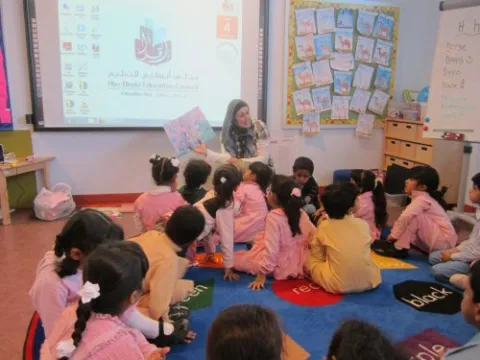
I have taught elementary school, English language learners, gifted learners, and adult learners. I have taught in multiple states and Department of Defense schools, even in Abu Dhabi prior to becoming a military spouse. When being shown my new classroom for the first time, I have been presented with rooms filled with new curriculum and research-based learning materials to ensure students meet learning outcomes, and I have been presented rooms with little more than four walls, desks, and the promise of potential. Regardless of what I walked into, I built something meaningful in every classroom.
Then I packed it up and started over.
I entered teaching at the peak of the 2008 recession. Early in my career, it was a struggle to find a teaching position amidst district cutbacks, and that experience continued to haunt me. I married my husband in 2017 and within three months we were embarking on our first Permanent Change of Station orders, the same questions came to mind: is it going to be challenging this time? What are the districts doing in that area? That quiet anxiety followed me from duty station to duty station, even as my resume grew and my experience deepened.
If you had asked me ten, even five years ago, whether I would ever leave the classroom, I never would have thought the answer would have been “yes.” It would have felt like giving up something I loved. Being with students was what I had worked so hard to achieve and fought so hard to hold onto, even when the U.S. job market pushed me overseas to find a classroom of my own.
I simply could not have imagined ever choosing to leave it.
The Hidden Costs Nobody Warns You About
People understand that military families move. What they do not always fully is what that means for a family, for a career, or for the person trying to build a sustainable one.
Moving is more than just packing up our families’ lives. It is packing up a classroom, which can be the equivalent of a small apartment. Boxes upon boxes, carried home and stacked in the garage, hoping to see a classroom again in the fall. New licensing requirements to meet, new curriculum to learn, new school cultures to navigate, and always being the new teacher.
And then, just when you have finally become a recognized name, just when you have built community, it is time to pack up and do it all over again.
My husband is an Army officer, and the mission drives the timeline, not us.
When we moved to Washington, to meet certification requirements, I had to reach out to the high school I graduated from, 15 years earlier, to track down my SAT scores. I had already been certified in four states and held an M.S. in Education at the time. Regardless, I had to prove myself from scratch because I had waivered out of one of the required standardized tests a decade and a half earlier and had no way to replicate that path in a new state.
Licensing barriers like this are among the most documented structural challenges military spouses face. What the confirms in data, I confirmed in testing, in email, and in frustrating bouts of waiting for a licensure approval.
The opportunity for professional growth was another challenge. With stability never promised, I kept bumping into the ceiling that comes with starting new. Just as I would begin to feel comfortable in a school, orders would come.
The Moment That Changed Everything
COVID was not easy. We had a one-year-old at home and on March 13, 2020, the world as we knew it stopped. In doing so, it opened my eyes to something I had not considered before: the possibility of remote work.
During that period, I moved into curriculum writing, online teaching, and instructor supervision. I found that the skills I had already established in the classroom translated directly to my work outside of the classroom. I was still analyzing data and using it to drive decisions. I was still pivoting quickly when things did not go as planned. I was still building relationships and supporting people through challenges. The work had a new name but functioned in much the same way.
When the orders came this time, I took my work with me.
Remote work is not a preference for our family. It is the only path that makes logistical sense given our life. Short notice moves, competitive housing markets, and limited local resources make finding before and after school care genuinely difficult in the places the military sends us. According to the 2025 Military Family Lifestyle Survey, most military families now rely on two incomes to remain financially stable, with 68% of active-duty family respondents saying two incomes are vitally important to their financial well-being. We are simply not living in a time where it is practical, in most places, to be a single income family.
Remote work allows me to support my family financially while building a career I can actually keep. It allows me to challenge myself, to pursue professional growth, and to utilize the skills I have developed throughout my career. It requires discipline and integrity, but military spouses have been building both of these our entire adult lives.
I no longer have that transitional role, but even now, instead of fire drills, I manage different kinds of emergencies. Instead of new curriculum, I am guided by policy and regulation. The skills we have built managing countless moves only add to our efficiency.
What I Had to Let Go Of
I will be honest, I had a lot of feelings when I first changed careers.
It felt like giving up a piece of myself, one I had worked so hard to find in the first place. You hear people talk about the difference between a job and a career, and to me, teaching was not just a “job,” it was a “career,” it was a piece of me. It was something I had chased across state lines, deserts, and oceans. Leaving, in a way, felt like giving up on a piece of myself.
I do not view it that way anymore.
It was through IVMF’s Onward to Opportunity program that I expanded upon the knowledge I was learning in my new role and built my confidence. The support within this community helped me earn my PHR certification and confirmed I was on the right path.
I did not leave the skills behind. Learning to build relationships quickly, adjust when lessons fell apart, and find new ways to reach struggling students became part of how I approach every job I have had since. I may no longer work with children on a day-to-day basis, but that does not take away part of my identity.
What Stability Actually Looks Like
We have been at Fort Meade for nearly two years with no immediate move on the horizon.
For most people, two years is not a long time. For us, it feels like a lifetime, and it has been transformative.
My young daughters are making friends. They are looking forward to the next school year, during which they will remain at the same school, something I do not take for granted. I am not spending my mental energy putting a house on the market or searching for a new one. I have been able to get involved at my daughter’s school and support them in earning Maryland Purple Star school status, a recognition for schools committed to serving military-connected students.
I am also pursuing a doctoral degree in Educational Leadership. My research focuses on why public schools remain structurally unprepared for military-connected students, despite those transitions being entirely predictable. My daughters experienced this gap with our most recent PCS.
When my daughter was struggling with anxiety after our move, I asked the school about support for military-connected children. What I found was a school with no way to identify her as military-connected, and without that data, no way to recognize that she, and other military-connected students like her, needed peer buddies, a military liaison, or other community support. I worked closely with the school’s newly identified military liaison to close those gaps, which led to Maryland Purple Star recognition in April 2026. Throughout the process, I led staff professional development, built a three-year plan for the school, created a community guide for incoming military families, and helped kick off Month of the Military Child recognition. This is not something I can unknow, and has driven me to pursue change.
In 2023, I published a children’s book called “Garden of Me,” a story about building personal identity through the places you have called home. The idea grew from my experience: with deep roots in my hometown, I wanted to give my daughters something similar, even as their home kept changing. At its heart is the belief that the places we leave do not disappear from our lives. We carry them with us.
For the first time in my career, I am genuinely excited about what comes next. There are growth opportunities, room to build my professional capacity, and the potential to stay long enough to see it through.
Standing in that empty classroom last week, I felt what I had already written years before in “Garden of Me.” The places we have been are not just behind us. They are part of us.
What I Would Tell You
If you are a military spouse who is struggling with your career right now, I want you to know that changing directions is not failure.
It may feel confusing and scary in the moment.
Our resumes do not always look traditional, but they tell a story. Every move forces us to learn something new. We have to become comfortable being the new person, figuring things out quickly, and rebuilding professional relationships from scratch. Those are not weaknesses. They are our strengths. Trust yourself and trust your path. Every role, every classroom, every duty station, every restart has added something to who I am becoming, and they do the same for you. Every step forward brings the full picture a little more into focus.
We have been starting over our entire adult lives.
At some point, that stops being a hardship and starts being our superpower.
I spent years learning how to start over. What I am learning now is how to stay.