
Gabi Bell had four kids, six suitcases, two cats, and a bird. She had no plan.
In the middle of a PCS move, her marriage fell apart. The reintegration after her husband’s deployment never happened. The abuse behind closed doors went unspoken for too long. And suddenly, she was alone, starting over, with nothing but her children and a fierce determination to rebuild.
What she built was a business. Not because she had planned to, but because the system left her no other choice. Like many spouses, she put her own career on hold through deployments and relocations while raising four children. When her marriage ended, she was starting over as a single mother of four. She saw no easy way back into a workforce that was never built to see someone who moves as often as a military family does as anything but an unreliable employee. So, she made her own way. She turned the remote assistant job she had been doing from home into a business, and started hiring other spouses searching for work flexibility.
Gabi’s story of being a military spouse that had to overcome the odds is not an outlier. Thousands of military spouses face very similar uphill battles every day.
The Data Behind the Story
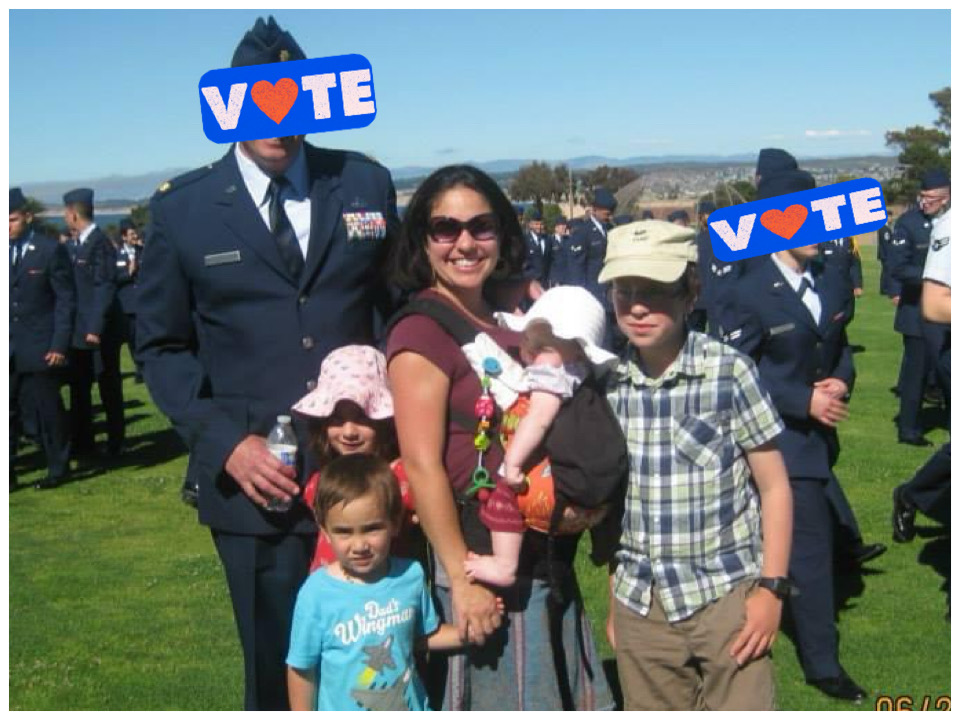
Sadly, what Gabi’s experienced is not an anomaly. This is unfortunately the pattern for many military spouses, and now three major research efforts have documented this pattern in detail.
According to the 2025 Blue Star Families Military Family Lifestyle Survey, military spouse employment is the number one concern among active-duty families, cited by 50% of respondents, ranking above military pay, housing affordability, and childcare. And yet, the structural conditions that drive that concern remain largely unchanged.
The D’Aniello IVMF Military Spouse Employment Landscape report found that active-duty military spouses earn a median income 42% lower than their civilian counterparts. For those who relocated within the past year, average income dropped further still, to $31,222, compared to $45,793 for those who stayed in place. One in four military spouses moves in any given year.
The Blue Star Families/Institute for Veterans and Military Families (IVMF) longitudinal study, Military Spouse Employment Initiative, the first of its kind to follow the same spouses over three years, found that even among a highly educated, highly motivated sample, fewer than 1 in 4 sustained steady full-time employment for three consecutive years. Not because they lacked effort or talent, but because the jobs available to them lacked flexibility, portability, and fair compensation.
What Employers and Policymakers Can Do
“Necessity is the mother of invention“
Gabi turned her situation of survival into becoming an employer, building OrganizedQ around the flexible remote work she once needed. She now provides those opportunities specifically for military spouses, veterans, and underemployed professionals. She’s created a business that caters to the chronically under-employed military spouse demographic, and it built a workforce that gives OrganizedQ a competitive edge.
The research is clear about what actually moves the needle for military spouses: work location flexibility, fair compensation, and access to mentorship. These aren’t just perks; they’re predictors of sustained employment. The BSF/IVMF longitudinal study found that spouses with flexible, portable jobs and access to mentoring were significantly more likely to maintain consistent full-time employment over time.
For policymakers, the stakes extend beyond individual careers. The 2025 MFLS found that 68% of active-duty families say two incomes are vitally important to their financial well-being. When spouse employment is disrupted by a PCS move, a deployment, a divorce, or an absence of flexible options, the entire family absorbs the cost.
The Bottom Line
Military spouses are adaptable, educated, and resilient. Research consistently shows their education levels far exceed the national average. They’re not the problem; the problem is a labor market that was never built with them in mind, that still hasn’t pivoted to include them.
Gabi’s story didn’t have to go the way it did. With the right employer policies and structural support in place, it might have looked very different. The question for employers and policymakers is whether the next military spouse who finds herself starting over will have better options than she did.
Sources: 2025 Military Family Lifestyle Survey (Blue Star Families); “Endless Adaptation, Limited Progress” (Blue Star Families & IVMF); “Military Spouse Employment Landscape” (IVMF)