
Planning to Pivot: Employment Lessons from a Military Spouse – 2026
Military Spouse Narrative Profile
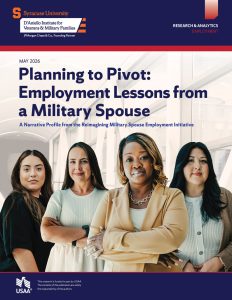
This narrative profile is part of a companion series to the Reimagining Military Spouse Employment research initiative. While the data briefs provide statistical analysis of employment patterns, industries, and outcomes, this series puts a human face on the data by following military spouses through the career pivots the research describes.
The series includes three profiles:
-
- Planning to Pivot – A new military spouse navigates early career disruptions, PCS moves, and the compounding effects of short-term decisions on long-term career outcomes.
- The Accidental Entrepreneur – A mid-career military spouse confronts childcare barriers, compounding setbacks, and the decision to build something of their own.
- To Stay or To Go – A discouraged worker weighs whether to exit the workforce entirely, and what that choice means for identity, finances, and family.
Each profile serves a dual audience: military spouses seeking practical insight, and employers and policymakers looking to understand the lived experience behind the data.
Related Research
This series draws on findings from the following IVMF publications:
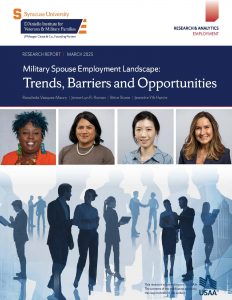
- Military Spouse Employment Landscape (March 2025)
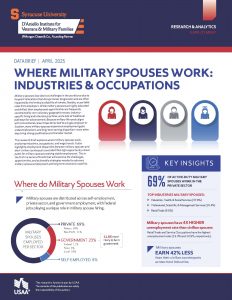
- Where Military Spouses Work: Industries & Occupations (April 2025)
This research is funded in part by USAA. The contents of this publication are solely the responsibility of the authors.
The Facts
Early Pivots
 “I knew what to expect on paper. But I didn’t know the extent to which these realities would impact me personally and professionally.”
EMPLOYER CALLOUT
My professional and educational background may not align, but it is not because of a lack of direction or vision. In our dual-income society, military spouses are often forced to take jobs rather than build careers.
Stat Verbiage
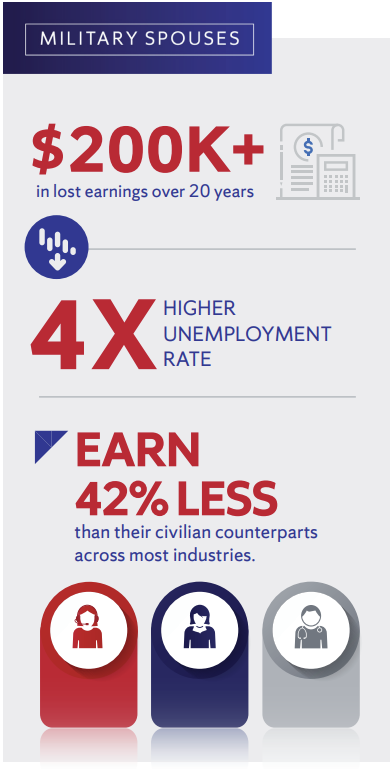
- $200K+ Lost earnings over a 20-year military career
- 4x Higher unemployment rate than civilian counterparts
- Earn 42% less than civilian counterparts earned across most industries
The Family Pivots
 “It was a family decision, but it felt like I bore the brunt of the costs.”
EMPLOYER CALLOUT
Military spouses hold up the home front. That means being on call for sick kids and when childcare falls through. Flexible work schedules and remote options are not just nice to have. Without them, it becomes significantly harder for military spouses to stay in the workforce.
Stat Verbiage
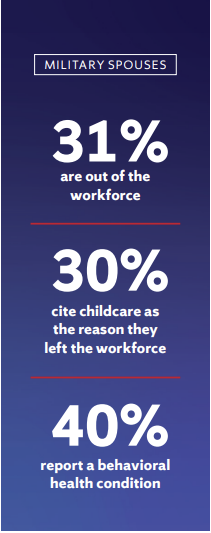
- 31% are out of the workforce
- 30% cite childcare as the reason they left the workforce
- 40% report a behavioral health condition
The Reentry Pivot
 “After stepping out of the workforce, I expected that returning would feel like picking up where I left off. Instead, it felt like starting over.”
EMPLOYER CALLOUT
Our patchwork resumes are not evidence of instability. They are evidence of ingenuity. Invest in mentorship, create pathways for advancement, and build roles that do not disappear when we move.
Stat Verbiage
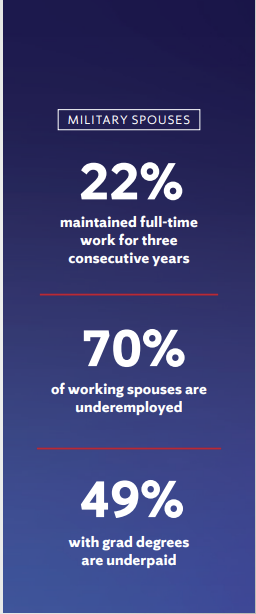
- 22% maintained full-time work for three consecutive years
- 70% of working spouses are underemployed
- 49% with grad degrees are underpaid
Related Research

About The Series
The Reimagining Military Spouse Employment narrative series includes three profiles:
Suggested Citation:
Barnhill, J., Maury, R.V., and Harvie, J.Y. (2026). Planning to Pivot: Employment Lessons from a New Military Spouse. Syracuse, NY: D’Aniello Institute for Veterans and Military Families, Syracuse University.

This research is funded in part by USAA. The contents of this publication are solely the responsibility of the authors.