
On December 10, 2025, Director of Entrepreneurship and Small Business at the D’Aniello IVMF, Misty Stutsman Fox, spoke to the House Committee on Small Business. You can read the testimony below.
Prepared for: House Committee on Small Business
Testimony by: D’Aniello Institute for Veterans and Military Families (IVMF) at Syracuse University
December 10, 2025
Video link: https://www.youtube.com/live/Q6C7HOF74Rg
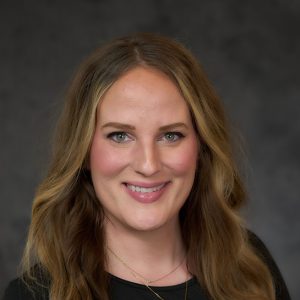
Misty Fox
Director of Entrepreneurship, IVMF
Introduction
Chairman, Ranking Member, and Members of the Committee, thank you for the opportunity to testify on the state of veteran and military-connected entrepreneurship. My name is Misty Stutsman Fox, and I serve as the Director of Entrepreneurship & Small Business at the D’Aniello Institute for Veterans & Military Families (IVMF) at Syracuse University. Each year, the IVMF serves tens of thousands of transitioning service members, veterans, and military spouses through programs that strengthen business ownership, build workforce pathways, and increase long-term economic mobility and stability for military-connected families nationwide. Much of the evidence I will reference in this testimony comes from IVMF’s own research, including the National Survey of Military Affiliated Entrepreneurs (NSMAE) and related studies of veteran and military spouse business owners as well as U.S. Census data.
The Role and Impact of Veteran Entrepreneurs
Veteran entrepreneurship is a proven driver of economic growth, innovation, and social mobility. Military service and small business ownership have long been connected. Since World War II, millions of returning service members have used business ownership to transition into civilian life, build wealth, and revitalize local economies. Some studies have shown that about 50% of World War II veterans had at one point started a business.
According to the U.S. Census Bureau veterans have historically and consistently been more likely than their civilian peers to pursue entrepreneurship, and once in business, they often outperform. In recent years, however, the self-employment rate for veterans has been declining, and the proportion of veterans starting businesses now mirrors civilian rates.
Today, veteran entrepreneurship matters to our economy, to workforce development, and to the long-term well-being of those who served. More than 1.8 million veteran-owned businesses operate across the country, generating $1.3 trillion in receipts, employing over
4.4 million Americans, and paying $233 billion in payroll. These businesses often anchor their communities, particularly in rural areas where veteran-owned firms represent a larger share of local employers.
Entrepreneurship also plays an important role in facilitating the military-to-civilian transition. For many veterans, business ownership represents a continuation of service and leadership, one that provides renewed purpose and agency during a period of significant change. It is not simply a career path; it is an identity pathway.
Veterans outperform their peers when opportunities are equitable and accessible:
- Veteran-owned businesses are 5% less likely to close and have an 2% lower risk of failure compared to non-veteran peers.
- 55–57% survive at least five years, exceeding the national survival rate
- 98% of veteran entrepreneurs report that military-developed skills helped them overcome business obstacles.
These advantages are grounded in distinctive assets, mission focus, adaptability, high-pressure decision-making, team leadership, and a commitment to accountability. They translate directly into skills required in the private sector, such as operational planning, training, resource stewardship, and the ability to navigate uncertainty.
Veterans Drive Economic and Social Impact
Beyond their measurable economic contribution, veteran entrepreneurs are drivers of community stability, civic engagement, and social innovation. Veteran-owned businesses are far more likely than civilian-owned businesses to reinvest in community priorities and hire other veterans, creating a ripple effect that benefits the broader transition pipeline.
- 47% of veteran entrepreneurs identify as social entrepreneurs, focused on solving community challenges through their business model.
- On average, veteran entrepreneurs estimate that 35% of their employees are other military-connected individuals. When veteran-owned businesses employ more veterans, they leverage shared experiences to create supportive, mission-oriented
This social impact model reflects a shared value proposition: empowering veterans to succeed in entrepreneurship strengthens workforce systems, reduces unemployment and underemployment, and deepens community resilience and cohesion.
Challenges in Today’s Entrepreneurial Landscape
Despite their strengths, veterans encounter persistent barriers that limit business formation, stability, and scale Drawing on IVMF research, including the NSMAE, related studies, and our experience working with veteran and military spouse entrepreneurs, five areas stand out. These challenges are not driven by lack of ability or motivation, but by structural gaps that require coordinated policy responses.
1. Access to Capital and Capital Readiness
Access to capital remains the most cited barrier for veteran entrepreneurs, from microenterprises to growth-oriented firms. In our research, access to capital consistently appears as a top challenge, although some veteran entrepreneurs experience it more acutely than others. Veterans often underestimate capital needs during the scale-up stage and rely heavily on personal savings or credit.
- 50% of startup businesses (under $250k revenue) relied on personal savings for
- 59% needed less than $25,000 to start, but
- 51% needed more than $50,000 to grow, often without preparation for debt, investment, or procurement-based financing.
A culture of self-reliance within the veteran community can delay engagement with technical assistance, which impacts creditworthiness and loan readiness. These challenges are even greater in rural regions:
- Nearly half (47%) of rural veteran entrepreneurs applied for credit in the last
- 36–50% were denied or received less than requested, depending on rural
Capital access cannot be addressed without capital preparation. Technical assistance, financial literacy, and procurement of readiness are essential to unlocking the financing required to compete.
2. Navigation and Fragmented Support
Today’s support landscape includes many well-intentioned but short-term interventions. At the same time, it is large and often disjointed, spanning federal agencies, state and municipal programs, national nonprofits, corporate strategies, and grassroots coalitions. Veterans often struggle to determine what program fits their business model, which stage they qualify for, and how supports link across multiple years.
- 46% report difficulty finding or accessing resources, increasing to 65% among rural
- Many programs are tied to transition windows, even though the median time to start a business is nine years after service.
Fragmentation results in duplication, missed opportunities, and uneven access, particularly for first-generation entrepreneurs, caregivers, and those serving in the Guard and Reserve. In an environment where new initiatives and providers are constantly emerging, it is reasonable to expect organizations to build clear pathways, make high quality referrals, and actively help the veterans who come to them navigate the broader ecosystem, not just their own program.
3. Rural Entrepreneurship Gaps
Veterans in rural communities are often assets to local economies, creating businesses that preserve community identity, provide essential services, and diversify local industry.
However:
- 39% of veteran entrepreneurs reside in rural or small-town America, where support is limited.
- Rural veterans report fewer peer entrepreneurs, fewer nonprofits, and less access to technical assistance.
- Broadband constraints and distance to support centers create significant disparities in revenue growth and business longevity.
These gaps reflect not only economic distance, but social and informational distance—networks matter, and many rural veterans lack access to them.
4. Barriers to Corporate Procurement
Our research, including outcomes from the Walmart-funded Corporate Procurement Readiness Summit, found that corporate supply chain entry points are often opaque.
- Only 12% find corporate contracting requirements easy to
- 34% require more than $50,000 in available capital to scale and meet procurement
- Bid rejection rarely includes actionable
Veterans face a translation challenge: corporate language, relationship-building, contract cycles, and documentation requirements differ significantly from military norms and small government contracting.
5. A Changing Veteran Support Ecosystem
Traditional veteran service organizations, once the backbone of post-service support, face shifting donor priorities and reduced membership engagement.
- VSOs have seen a 12% decline in revenue since 2016, with donor retention below 20% nationally.
- Research from the SBA Office of Advocacy (2021) shows that millennial veterans, the most diverse veteran cohort, start businesses at lower rates than their non-veteran peers, primarily due to financing challenges.
As the ecosystem changes, so must the strategy for how federal, corporate, nonprofit, and educational partners coordinate. Without intentional alignment, veterans may encounter duplicative services while other critical needs remain unmet.
Transition Entrepreneurship Education and Boots to Business
SBA’s Boots to Business course is one of the few federal tools that reach service members right as they are thinking about life after the military. Delivered through Transition Assistance Program sites and partners such as Syracuse University, Mississippi State University, and Veterans Business Outreach Centers, it gives service members a realistic introduction to small business ownership, financing, and the SBA resource network. Our own data show that the median time to start a business is about nine years after service, so most participants will not launch a business immediately after taking Boots to Business. It is better understood as planting a seed than as a trigger for immediate start up activity. The value of the course is that it gives service members a basic language for entrepreneurship and a clear sense of who to call later; years down the road, many of the veterans we see in IVMF programs can still point back to Boots to Business as the moment they first saw business ownership as a realistic option and knew how to connect with SBA partners when they were ready to move from interest to action.
Importance of Public-Private Partnership
Recognizing that the SBA cannot address all challenges alone, a symbiotic relationship between the public and private sectors becomes crucial. Public-private partnerships, exemplified by SBA collaboration with the non-governmental partners, create a responsive ecosystem. This collaboration ensures tailored solutions to diverse challenges faced by transitioning veterans, fostering an environment where they can thrive.
Public-private partnerships create a proactive and ‘needs-driven’ ecosystem, ensuring tailored solutions to diverse challenges faced by transitioning veterans. An example is the IVMF’s VetSource program, a partnership to support and connect those military-connected business owners seeking their first, second, or third contract with a Fortune 500 corporation or prime government contract. These types of government-industry collaborations are instrumental in fostering an environment where veterans can thrive as business owners and leaders. Further, the return on investment of these types of collaborations is clear.
Since World War II, veteran-business owners have played a pivotal role in the nation’s economy. Each year, veteran-owned businesses make significant contributions to the U.S. economy, employing over four million Americans and generating $1.3 trillion in total sales. Beyond economic considerations, empowering veterans as business owners aligns with ideals of service and citizenship. Veterans, who defended freedom, can now contribute to economic freedom through business ownership. Expanding access to business ownership via public-private partnerships is not just economically sensible; it is a recognition of the deserving pursuit of the American Dream by those who pledged to defend it in uniform.
Syracuse University’s D’Aniello Institute for Veterans and Military Families (IVMF) Programs
The D’Aniello Institute for Veterans and Military Families (IVMF) contribute directly to the military-connected business ownership ecosystem. Specifically, the IVMF designs and operates a portfolio of transformative initiatives that include eleven national training programs and three tailored information hubs, each designed to meet veteran entrepreneurs where they are in their business lifecycle. Across this portfolio, the IVMF has provided business ownership training to more than 70,000 military-connected entrepreneurs over the past decade and navigation and guidance services to 35,000 individuals, all at no cost to the veteran.
The IVMF’s entrepreneurship portfolio includes programs such as the Entrepreneurship Bootcamp for Veterans (EBV), for service members, veterans, and spouses in the ideation and start up stages. Where public funding is available, it provides an important anchor, but it only covers part of the cost and scope of the entrepreneurship work we do, so IVMF also relies on corporate and philanthropic partners to sustain and expand these programs. Programs such as the Veteran EDGE conference, corporate supplier diversity efforts like the Coalition for Veteran Owned Businesses (CVOB) and growth focused peer groups such as CEOcircle, powered by JPMorgan Chase Commercial Banking in partnership with the IVMF, focus on growth, capital readiness, and access to corporate and government procurement opportunities. Through these efforts, we have facilitated more than 18,000 connections between veteran owned businesses and Fortune 1000 companies seeking to work with them. Our programs and resources help participants connect these offerings over time, so they experience a path, not just a single course or event.
One example of how this support plays out in practice is the story of Michael Bower, a U.S. Marine Corps veteran and owner of Eagle Metalcraft, a precision sheet metal manufacturer in East Syracuse, New York. Michael’s journey began with a vision to ensure manufacturing thrives in the United States while creating good jobs and giving back to his community. Through IVMF’s Community Navigator Pilot Program, he was connected to a network of experts, including SCORE mentors, Small Business Development Center advisors, and Bowers CPAs & Advisors, who supported him with acquisition financing, entity selection, tax work, and broader financial planning. He first stepped in as general manager at Eagle Metalcraft in 2020 and completed the acquisition of the company in February 2022. Under his leadership, the firm has doubled its sales and workforce in about three years and was named the 2023 Veteran Small Business of the Year by the SBA’s Upstate New York District. Michael has said that “the help is really what changed our ability to add jobs,” and that support gave the company the foundation it needed to grow and add jobs in Central New York.
A second example is Nick Ripplinger, a veteran entrepreneur and IVMF alumnus who has engaged with multiple programs over the course of building his company. Nick has participated in EBV, EBV Accelerate, the Acceleration Challenge, the Veteran EDGE conference, and CEOcircle, and has successfully competed for government contracts, and SBIR and STTR awards. Today, Nick leads a multimillion-dollar company where about half of his employees are veterans. He has also invested in and advised several other companies showing how entrepreneurship can translate military experience into good jobs and long-term economic mobility for those who served.
CEOcircle, IVMF’s program for scaling veteran entrepreneurs powered by JPMorgan Chase, illustrates how private sector partnerships can scale this impact. Since 2021, CEOcircle has served 318 veteran and military spouse entrepreneurs across five cohorts, with participating businesses raising more than 1.3 billion dollars in capital and creating at least 656 documented new jobs. More than half of participants report revenue increases that they attribute to the program, and nine in ten report gaining advisor and mentor connections. One CEOcircle participant explained that, over two years in the program, they were able to use JPMorgan Chase resources to move their business forward and generated more than 50,000 dollars in new sales directly from relationships with other cohort members. These results demonstrate what is possible when banks and corporations invest in veteran-owned firms not just as suppliers, but as long-term growth partners.
Taken together, these stories match what we see in our research. Veterans consistently identify access to capital, difficulty navigating resources, and gaps in coordination as key barriers. When training, mentorship, capital readiness, and capital access are aligned through programs like those in the IVMF portfolio and private-sector partnerships like CEOcircle, veteran-owned businesses are better positioned to start, grow, hire, and reinvest in their communities.
Recommendations for Congressional Action
Congress can help veteran entrepreneurs start and grow businesses by strengthening coordination, expanding access, and making sure programs fit the needs of veteran and military spouse business owners.
1. Build Integrated, Regional Veteran Entrepreneur Ecosystems
- Fund regional ecosystem mapping and coordination
- Incentivize cross-sector partnerships between SBDCs, universities, VSOs, state commerce offices, and rural entrepreneurship centers.
- Reduce duplication and improve local access through shared intake and referral systems. We have tried navigation models and it works.
2. Strengthen Capital Readiness and Capital Access
- Expand SBA’s Veterans Advantage and Microloan
- Increase funding for coaching, credit repair, and capital readiness
- Encourage community-backed funds with veteran-specific underwriting
3. Improve Navigation, Timing, and Program Accessibility
- Fund navigators or “concierge” models that follow the entrepreneur, not the eligibility window.
- Ensure programs accommodate post-transition entry points and non-traditional service pathways.
4. Rural-Focused Entrepreneurship Initiatives
- Increase rural entrepreneurship grants, incubators, and broadband-based support
- Develop rural procurement and supply chain access
- Support capacity-building for rural chambers, universities, and economic development organizations.
5. Corporate Procurement & Supplier-Diversity Readiness
- Coordinate and align potential supplier
- Standardize feedback for unsuccessful bids to improve
- Fund matchmaking and shared learning between corporations and veteran-owned
6. Invest in Data and Metrics that Reflect Real Outcomes
- Move beyond participation counts and graduation
- Track confidence, capital access, revenue growth, procurement readiness, and five-year survival rates.
- Pilot, then evaluate improvements to SBA capital and entrepreneurial development programs for veterans.
Conclusion
Veteran entrepreneurs are not asking for special treatment; they are asking for systems that reflect their potential and remove avoidable barriers. When given equitable access to capital, networks, and clear procurement pathways, veterans outperform, innovate, and build community strength into the fabric of the American economy.
By supporting coordinated ecosystems, navigation support, rural access, and procurement readiness, Congress can help ensure entrepreneurial opportunity is achievable for every veteran—regardless of geography, background, or time since service. Thank you for your continued leadership and your commitment to empowering those who once served our nation to continue serving it in new and impactful ways.
References
D’Aniello Institute for Veterans and Military Families (2024). “2022 National Survey of Military-Affiliated Entrepreneurs: Military Spouse Entrepreneurs.” Syracuse, NY: D’Aniello Institute for Veterans and Military Families (IVMF) at Syracuse University. https://surface.syr.edu/cgi/viewcontent.cgi?article=1460&context=ivmf
Maury, R.V. and Pritchard, A. (2025). “A Framework for Advancing and Strengthening the Veteran Entrepreneur Ecosystem.” Syracuse, NY: D’Aniello Institute for Veterans and Military Families (IVMF) at Syracuse University. https://surface.syr.edu/cgi/viewcontent.cgi?article=1496&context=ivmf
Maury, R.V. and Pritchard, A. (2024). “Military-Connected Entrepreneurship Ecosystem: Advancing Military-Connected Entrepreneurship.” Syracuse, NY: D’Aniello Institute for Veterans and Military Families (IVMF) at Syracuse University. https://ivmf.syracuse.edu/wp-content/uploads/2024/09/2024_WALMART_Research_Brief_Entrepreneurship-Ecosystem_FINAL_10.11.24.pdf
Maury, R.V. and Pritchard, A. (2024). “Military-Connected Small Business Profiles: Access to Capital and Resources Across Revenue Stages.” Syracuse, NY: D’Aniello Institute for Veterans and Military Families (IVMF) at Syracuse University. https://surface.syr.edu/cgi/viewcontent.cgi?article=1456&context=ivmf
Maury, R.V.; Pritchard, A.J.; and Tihic, M. (2023). “2022 National Survey of Military-Affiliated Entrepreneurs: Veteran Entrepreneurship across Urban and Rural Places.” Syracuse, NY: D’Aniello Institute for Veterans and Military Families (IVMF) at Syracuse University. https://surface.syr.edu/cgi/viewcontent.cgi?article=1426&context=ivmf
U.S. Small Business Administration Office of Advocacy (2021). “Millennial Veteran Entrepreneurship: Research on the Next Generation of Veteran Entrepreneurs.” Washington, D.C.: U.S. Small Business Administration (SBA).
U.S. Small Business Administration Office of Advocacy (2024). “Veteran Ownership Statistics 2024.” Washington, D.C.: U.S. Small Business Administration (SBA). https://advocacy.sba.gov/wp-content/uploads/2024/11/Veteran-Ownership-Infographic-Series-2024_FINAL.pdf