
Findings from the D’Aniello IVMF Skills-Based Opportunity and Digital Credentialing Roundtable, supported by the Walmart Foundation
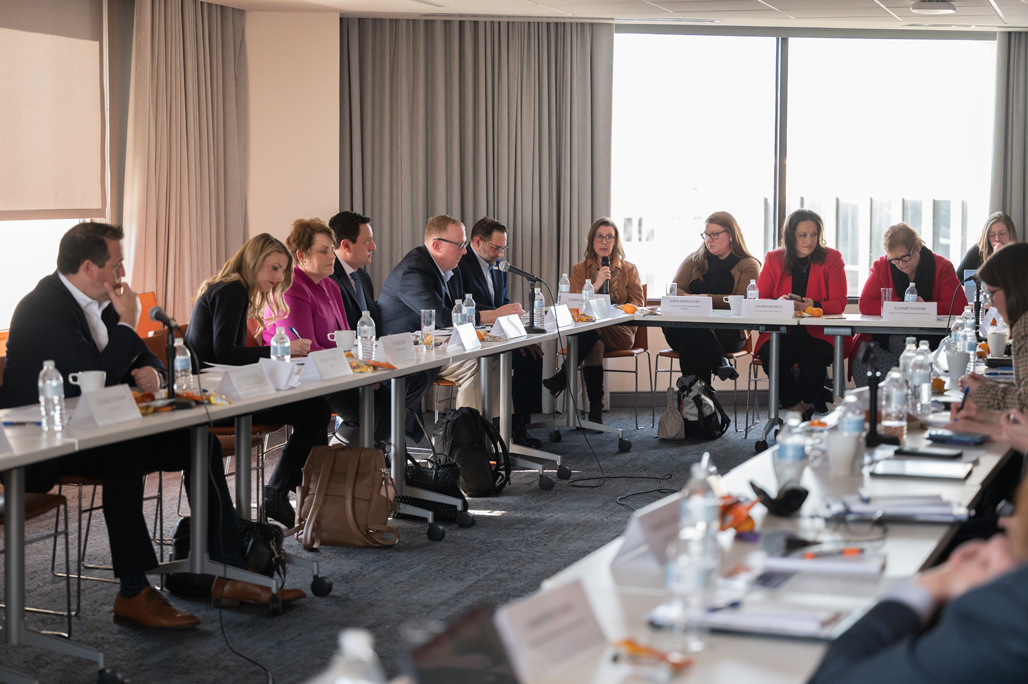
For practitioners, researchers, and policymakers who work at the intersection of military transition and workforce development, the current moment presents a genuine tension. The frameworks supporting skills-based hiring and digital credentialing are more developed than they have ever been. The evidence base has grown considerably over the past decade. And yet the policy environment is shifting in ways that could undermine aspects of the infrastructure built over the past two decades, particularly in areas such as voluntary education and credentialing systems. Earlier this year, the D’Aniello IVMF convened a cross-sector roundtable in Washington, D.C., supported by the Walmart Foundation, to take a clear-eyed account of where the work stands, where the most significant gaps remain, and what coordinated action across sectors could realistically accomplish.
By bringing together their expertise and insights, participants discovered that the connections between existing tools, institutions, and investments remain underdeveloped, and that without collaboration, even well-designed interventions reach fewer people than the problem requires.
When the Window Closes Too Early
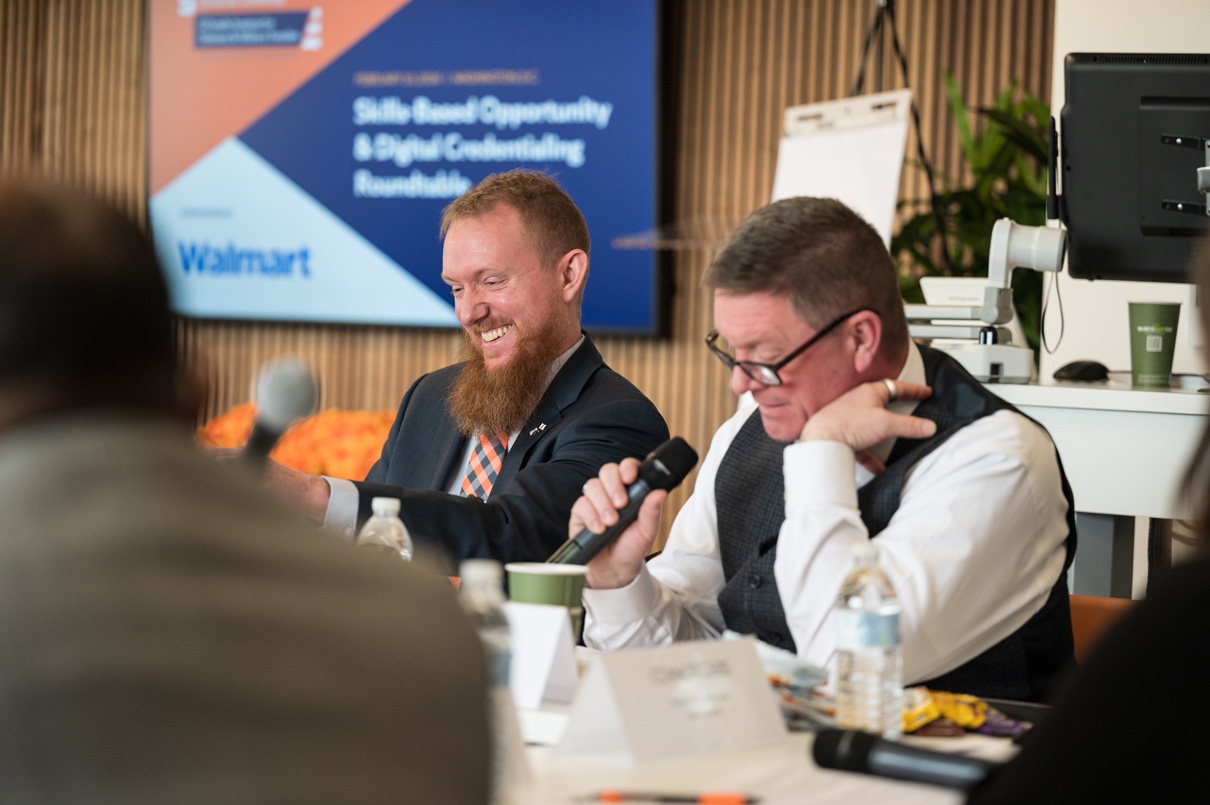 Longitudinal research presented at the roundtable added precision what TAP counselors, VSO case managers, and installation transition coordinators have observed for years. Most veterans take approximately three years to feel fully settled in civilian life, and roughly one in five reports the same at six and a half years post-separation, according to The Veterans Metrics Initiative (TVMI), a multi-year longitudinal study coordinated with Penn State’s Clearinghouse for Military Family Readiness. Nearly 70 percent of veterans who secure employment immediately upon separation leave that role within six months, a figure that points less to individual job-seeking failure than to a structural mismatch between how veterans enter the civilian labor market and what that market is prepared to offer them.
The reasons for that mismatch are well documented. Veterans routinely calculate expected civilian compensation against military pay packages that include BAH, BAS, and other allowances, which produces salary expectations that can make an initial offer appear reasonable and later prove insufficient. Role fit presents a related problem. Neither the employer nor the separating service members typically have the assessment infrastructure to evaluate alignment accurately before a hire is made, and TAP, which operates in a narrow pre-separation window, was not designed to fully address that gap on its own, particularly at scale. What the longitudinal data now makes clear is that the transition is not a discrete event requiring a bounded response. It is a multi-year process, and the credentialing and support infrastructure the field has built has not yet been designed to travel that full distance with the people who need it.
Programs like IVMF’s Onward to Opportunity reflect a different design logic. O2O meets participants across the transition arc, whether they are still in uniform, recently separated, or well into a civilian career that has not developed as anticipated. With more than 100,000 participants served since 2011, a curriculum expanding in direct response to employer certification demand, and a Penn State quasi-experimental validation study confirming statistically significant impacts on starting salary and six-month job retention, the program offers a working model for what sustained, skills-aligned training infrastructure can produce when it is designed for the actual length of the transition process rather than its first chapter.
When the Market Outgrows Its Own Standards
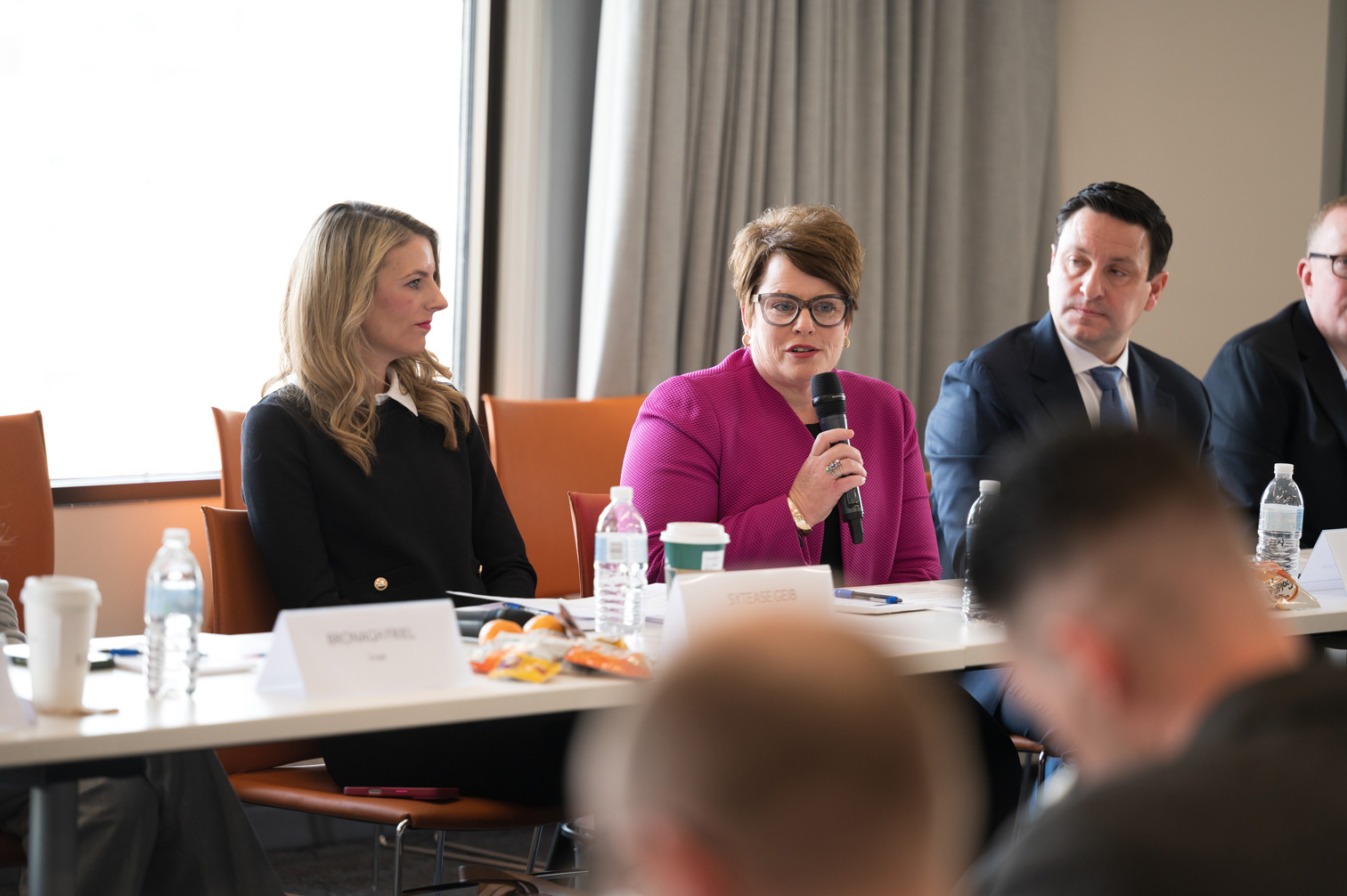 There are currently over 1.85 million credentials in circulation across the United States, issued by institutions, trade associations, online platforms, employers, and nonprofits whose quality assurance practices vary considerably.
One in four HR professionals reports difficulty determining what a credential actually signals about a candidate’s capabilities, and one in three supervisors agrees, according to SHRM Foundation skilled credentials research. Against that backdrop, the approximate six seconds recruiters typically spend on an initial resume review is not a behavioral quirk. It is the operational reality the credentialing field is designing for, whether it acknowledges that explicitly or not.
The roundtable repeatedly reiterated that the market does not need additional credentials so much as it needs to build existing credentials on more rigorous foundations. Occupational analysis should be grounded in verified military training documentation, aligned to recognized civilian industry standards, and use metadata structured to communicate competency clearly and quickly to a recruiter without specialized knowledge of military experience. The distinction between credentials that build employer trust and those that contribute to market saturation consistently traces back to the quality of the analytical work done before the badge is issued, not after.
The role of artificial intelligence in military-to-civilian skills translation is expanding quickly, and the roundtable examined that development with appropriate care. Translation that relies on inference from MOS codes or DD-214 data, without validation against actual training records, course outcomes, and documented competencies, introduces error at precisely the point where accuracy has the most direct bearing on employment outcomes. AI-assisted translation paired with rigorous human verification offers a genuinely more scalable approach to this work. The sequencing matters considerably: validation should precede deployment, and the field would benefit from clearer shared standards about what that validation requires.
What Veterans Read Before They Apply
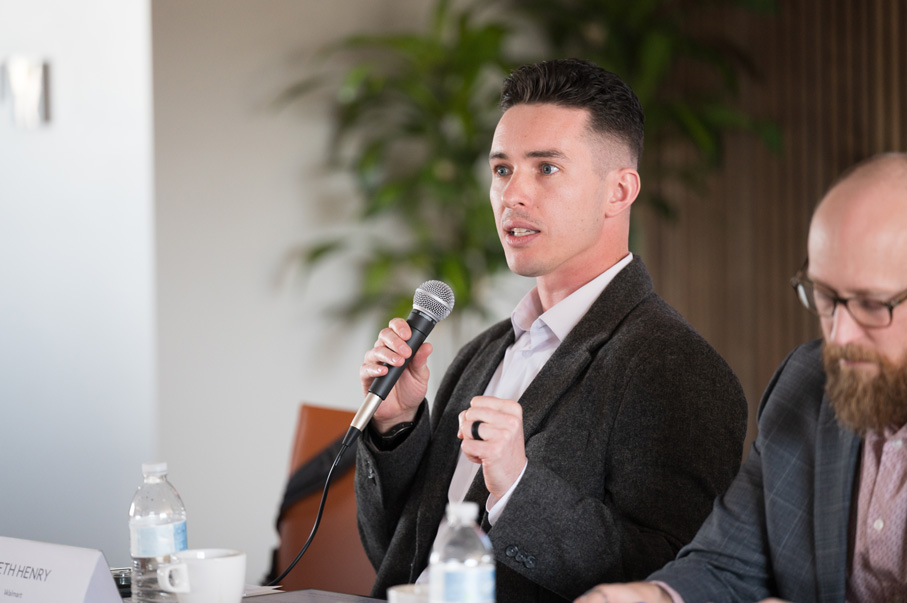 Research discussed at the roundtable examined how veterans respond to skills-based language in job postings, with preliminary findings attributed to Duke University’s Veteran Transitions Research Lab (VTRL). Veterans who encountered job postings written with explicit skills-based hiring language rated the organizations more favorably, found the roles more appealing, reported stronger anticipated belonging, and expressed higher confidence in their ability to succeed. The effect was described as consistent and measurable across the study sample, though confirmation of the final published findings is forthcoming.
The takeaway of this research identified is fairly straightforward. When an employer signals that demonstrated competency matters more than formal credentials, veterans tend to interpret that as evidence the organization will evaluate skills actually gained through their service rather than only checking the box for a credential. That perception influences application behavior before any direct contact between candidate and recruiter. It shapes the talent pool quietly, upstream of the hiring process itself.
The roundtable also examined a distinction worth considering as employers refine their approach. A pre-verified model, which asks candidates to document or demonstrate prior skills, signals that the organization broadly values what people have already learned through nontraditional pathways. An assessed model, which evaluates skills directly during the hiring process, signals that the organization has specifically built its evaluation infrastructure for candidates who fall outside conventional credential profiles. Both approaches produce meaningful positive outcomes. They communicate different things, and the difference is not incidental. Employers who have not examined which signal their current job postings are sending may find that gap worth addressing.
The Same Service Record, Two Different Outcomes
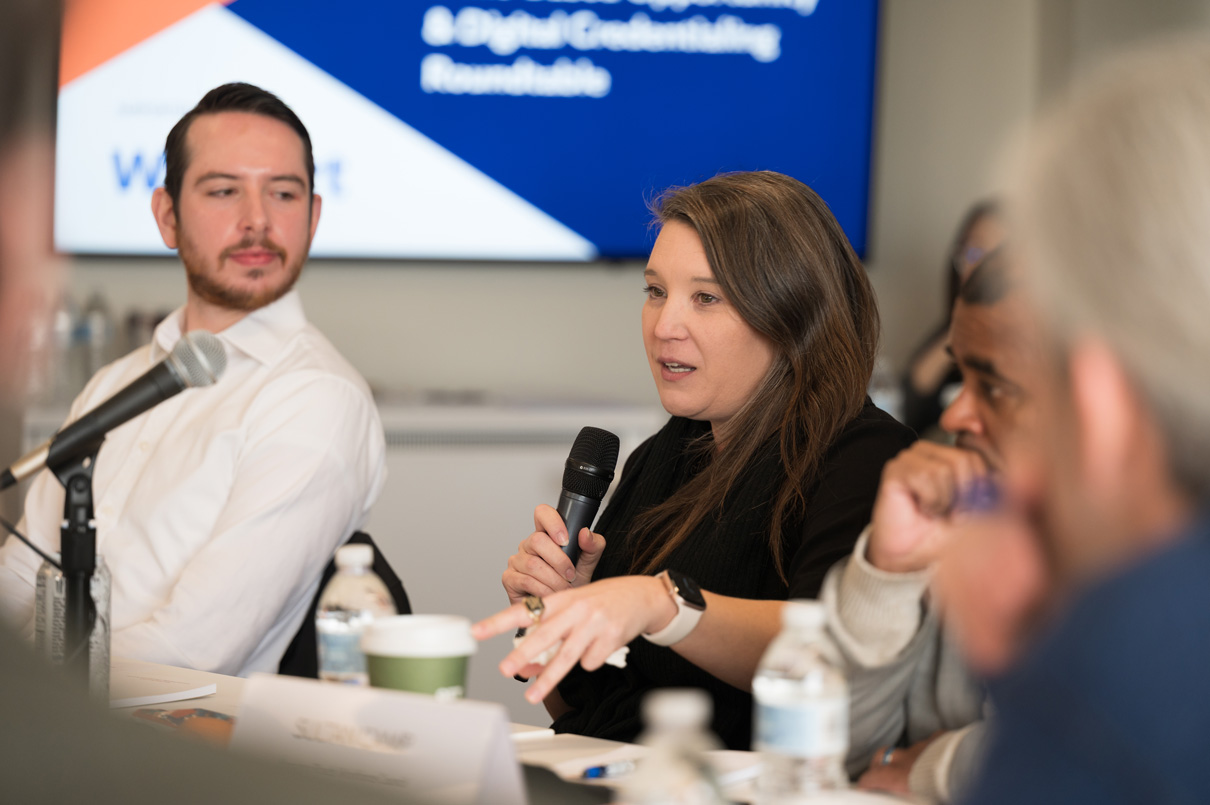 Credit for Prior Learning (CPL) has advanced meaningfully over the past decade. Joint Service Transcript evaluation, ACE credit recommendations, and the military articulation frameworks built at a growing number of institutions have created pathways for recognizing documented military learning that simply did not exist in this form a decade ago. A service member separating with verified logistics training, a security clearance, or technical certifications earned in uniform can now find legitimate academic pathways for that learning at institutions that have done the work to build those frameworks. That represents a genuine and consequential shift.
What the roundtable surfaced is the fragility beneath that progress. Acceptance of CPL recommendations remains highly variable across institutions, determined in practice by a combination of accreditation framework, state policy, institutional culture and course offerings rather than the quality or rigor of the military learning itself. The same service record can produce dramatically different credit outcomes depending on where a veteran enrolls. That inconsistency reflects a policy gap that is within reach of being addressed but has not yet been resolved at scale.
The more immediate concern involves potential federal changes to voluntary education infrastructure, including programs supporting tuition assistance, credentialing assistance, and the Joint Service Transcript. The Credit for Prior Learning ecosystem that practitioners in this space have spent years building depends on that infrastructure for its foundation. Changes that reduce or eliminate voluntary education funding could significantly disrupt the system and weaken key components of the existing framework. They would remove what the entire framework rests on, with downstream consequences for every institution holding military articulation agreements, every VSO providing education transition support, and every separating service member who has earned academic credit through documented military learning and is counting on that credit being recognized. That is a consequence the field should be prepared to speak clearly and specifically as these policy conversations develop.
The Tools Are Here, The Architecture Is Not
 The roundtable did not identify a shortage of programs, tools, or research. MOS-to-civilian crosswalk infrastructure, digital badging frameworks, CPL articulation networks, longitudinal transition data, and employer research on skills-based hiring behavior are all present in the field, and they are producing results in the organizations and institutions that have implemented them with rigor and sustained them past the first funding cycle.
What remains absent is a durable coordination function, the organizational or policy architecture that connects these tools to each other and to the people who need them, and quality accountability that travels with a credential from the point of issuance through the hiring decision. Funding mechanisms matter here as well. The multi-year timeline that transition actually requires rarely aligns with the appropriation cycles and grant structures that govern most of the investment in this space, and the institutional knowledge built during one funding cycle too often does not survive the transition to the next.
The non-degree credential space now encompasses roughly one in three working-age Americans and is expanding at a pace that has outrun the quality assurance frameworks designed to protect the people using it. The veteran credentialing ecosystem, with its GI Bill quality assurance requirements, CPL infrastructure, and validated badge programs, has spent years developing quality frameworks under similar conditions of rapid growth and variable rigor. Those frameworks, and the lessons that produced them, are directly applicable to the broader non-degree landscape. Pew Charitable Trusts’ ongoing Quality Skills and Education Pathways project is examining precisely these questions. Whether the knowledge transfers depends on whether the organizations and policymakers working in adjacent spaces are paying attention to it.
A workforce Pell Grant, anticipated to expand financial aid eligibility for short-term training programs beginning in July 2026, is expected to represent a meaningful policy development. Whether the appropriation scales to meet the demand it is likely to generate remains an open and important question for the field to track. SHRM Foundation’s Center for a Skills First Future, launched in 2025, is building parallel employer-side infrastructure that could accelerate adoption if the two efforts are coordinated.
Across administrations and across party lines, investment in workforce development infrastructure has reflected a durable national consensus. The question the roundtable kept returning to is not whether to build this system. It is whether to sustain and connect what has already been built, or allow the fragmentation that comes from underfunding and poor coordination to risk slowing or reversing progress that took two decades to accumulate. The infrastructure designed to serve them is, in a practical sense, the measure of that commitment.
About the Walmart Foundation
Since 2013, Walmart has hired more than 500,000 veterans and military spouses and has been among the most active corporate voices in the skills-based hiring conversation. The Walmart Foundation’s support for this roundtable, and for the research it convened, extends that commitment into the policy and credentialing infrastructure that determines whether veteran talent reaches employers equipped to recognize it. Learn more at walmarfoundation.org.