
A Story of Scale, Rejection, and Building Anyway
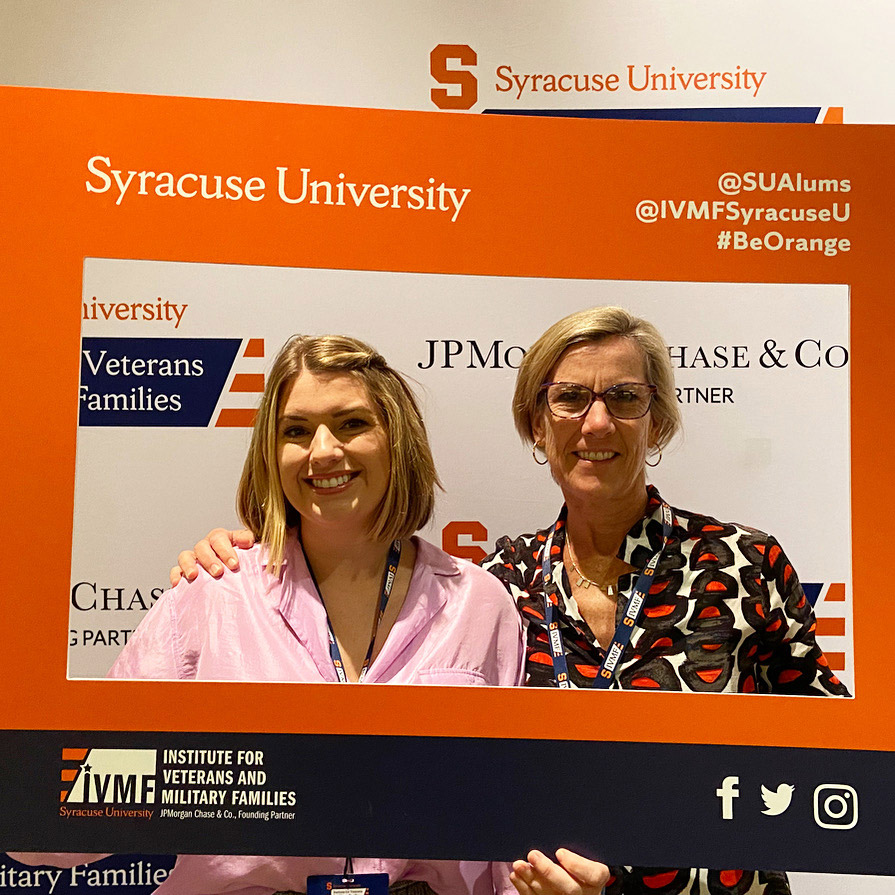 An email arrived in 2016 with a subject line Kathleen Ford almost deleted.
It was about a conference in Boston called V-WISE, Veteran Women Inspiring the Spirit of Entrepreneurship, a program for female military-connected business owners. Kathleen was a retired Army colonel, a 26-year veteran who had been on the executive team at and served as Deputy Commander for Nursing at the military’s Ft. Belvoir Hospital in the National Capital Region, supporting large-scale military healthcare operations during the height of two wars. More recently, she had been running a security integration company, scDataCom, with her daughter, Alaina Meyer, for two years. She read it but thought the last thing she needed was another conference.
“I was like, that’s probably lame,” she said. “But my sister lives up there. Sounds like a trip to Boston.”
So, Kathleen went to Boston and attended V-WISE with 200 other veteran and military spouse entrepreneurs. What she found there would change the trajectory of the company she and her daughter had spent years building against systems that repeatedly failed to recognize what they were already qualified to do.
Their story exposes a contradiction veteran entrepreneurs know well. The same leadership, operational discipline, risk management, and mission execution skills trusted in combat and national defense are often dismissed once veterans enter the business world. America trains leaders at the highest levels, then asks them to re-prove themselves from scratch when they become entrepreneurs.
Since 2011, more than 100,000 veterans and military spouses have come through entrepreneurship programs at the D’Aniello Institute for Veterans and Military Families (IVMF). The programs were built around barriers veteran entrepreneurs consistently encounter including access to capital, business education, network isolation, and the persistent challenge of translating military experience into entrepreneurial credibility. Kathleen and her daughter Alaina did not know it yet, but they were about to become part of a much larger story.
A Company Built Before Anyone Believed in It
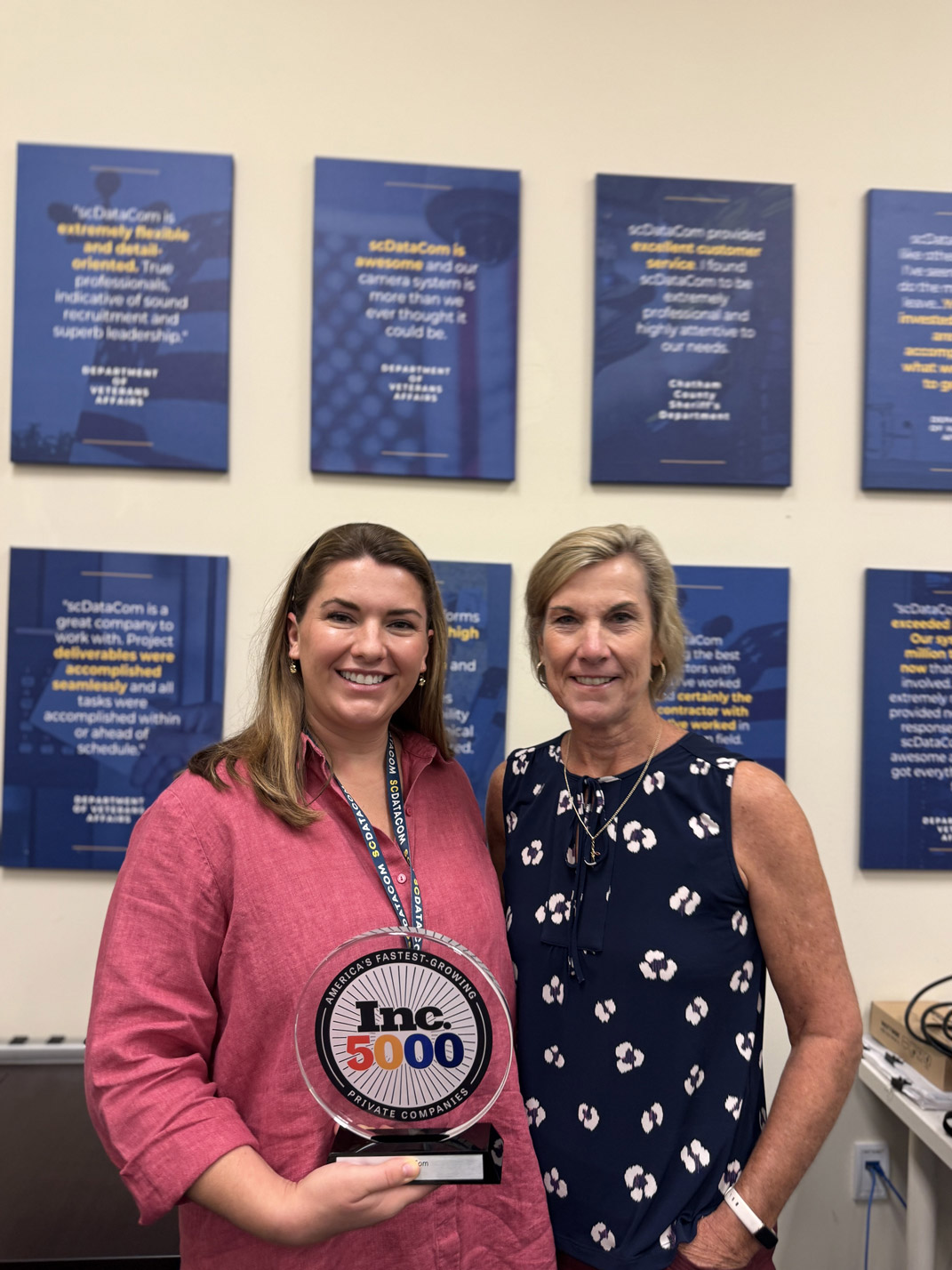 Alaina Meyer founded scDataCom in 2013 at 22 years old, coming from fine art sales with no formal business training and what she describes as “an entrepreneurial spirit, which is largely rooted in self-confidence with a splash of delusion.” She spent the first year trying to build the company largely alone before asking Kathleen to join her. Kathleen brought decades of operational leadership. Alaina brought vision and instinct.
“She’s the creative. I have a little more rigid thinking,” Kathleen said. “We complement each other.”
What started as a mother quietly helping her daughter became a full business partnership. More than a decade later, scDataCom has operated in over 37 states, employs more than 40 people, and has appeared on the Inc. 5000 four consecutive years.
None of it came easily. And very little of it came from systems designed to support businesses like theirs.
Kathleen had an 800-plus credit score, zero debt, decades of executive leadership experience, and a military pension when she applied for a business line of credit. She was rejected repeatedly. The best offer she received required securing a $25,000 line with $25,000 of her own money, and was due in full monthly.
“When you need credit, you can’t get it,” she said. “When you don’t need it, people are knocking down your door.”
Her experience was not unusual. IVMF research on military-affiliated entrepreneurs and access to capital found nearly half cite access to capital as their greatest barrier to growth, while 41 percent identify financing as the biggest obstacle to starting a business in the first place. In December 2025, IVMF’s Director of Entrepreneurship testified before the House Committee on Small Business that capital access remains one of the most persistent structural barriers limiting veteran business growth nationwide. Kathleen’s story was not an exception to the data. It was evidence of it.
The rejections were not only financial. Alaina, young and female in a heavily male-dominated industry, routinely attended conferences where vendors and clients assumed someone else owned the company.
“It used to bother me that I had to fight harder when I was younger,” she said. “But I feel very comfortable in what I’m doing, and I know I’m doing it well.”
“She’s Just a Nurse”
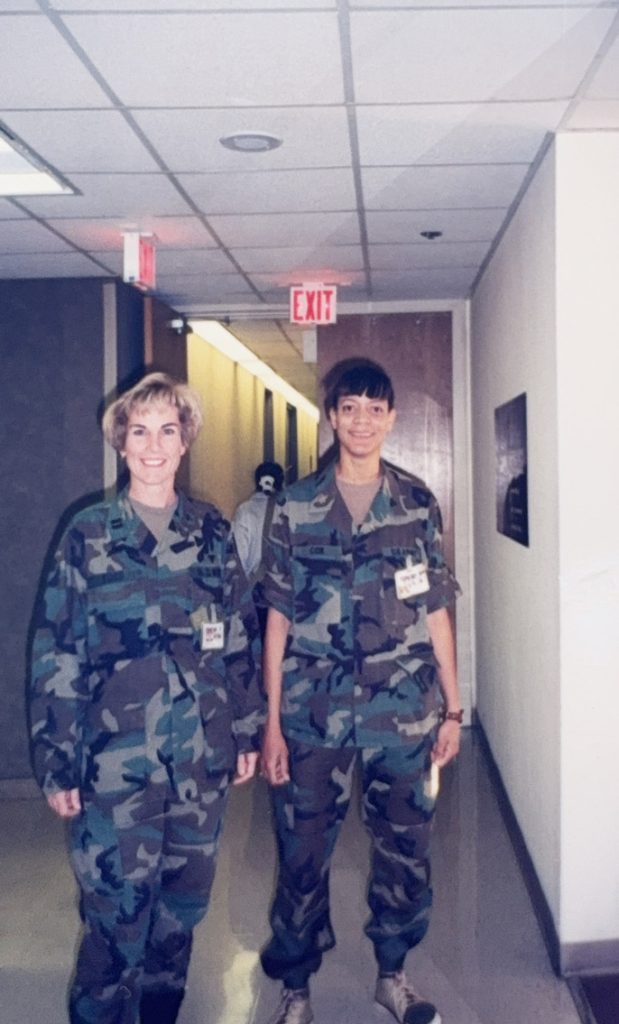
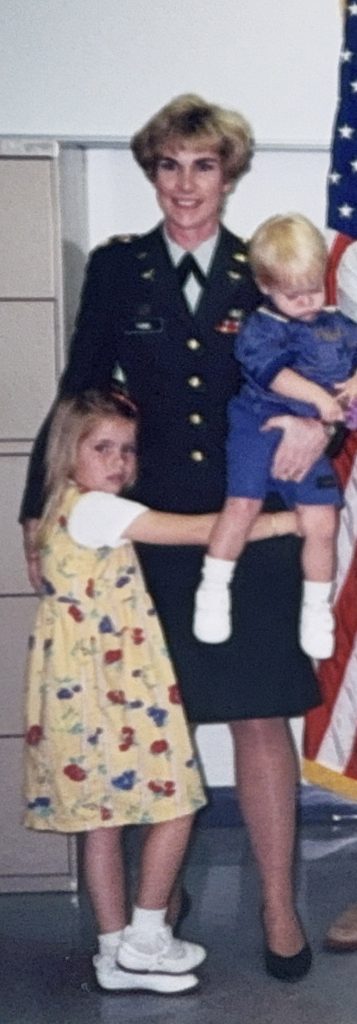
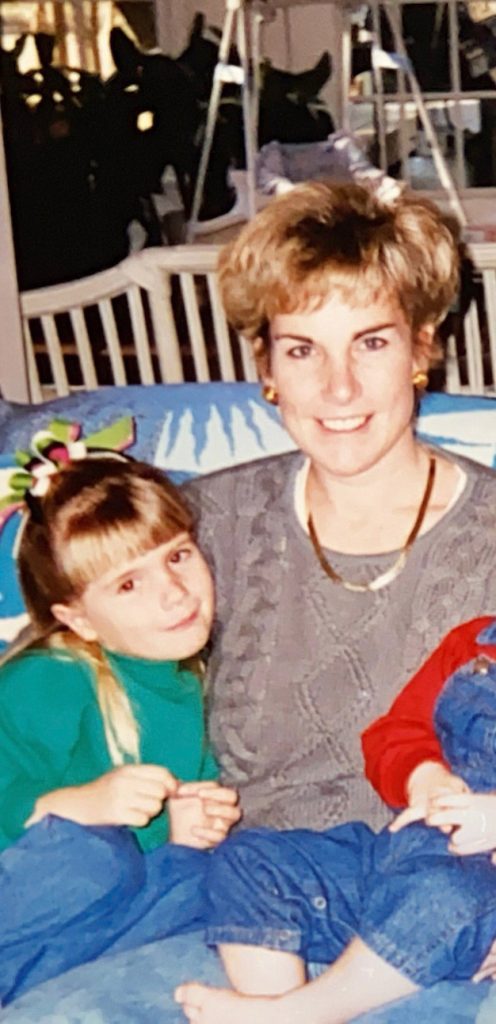 The most direct rejection came during scDataCom’s application for minority enterprise certification through a state Department of Transportation. The company already held certification through the Women’s Business Enterprise National Council, a rigorous process requiring in-person verification of ownership and operational control. Still, the DOT questioned Kathleen’s legitimacy.
Reviewers examined her Army Nurse Corps background and struggled to reconcile how a military healthcare executive could lead a security integration company. At one point, Kathleen said they suggested her husband, a former pilot, was likely the actual decision-maker behind the business. Then one reviewer said it plainly.
“She’s just a nurse.”
Kathleen had been on the executive team at Ft. Revoir, one of the military’s flagship hospitals near Washington, D.C., a sister facility to Walter Reed. There, she served as Deputy Commander for Nursing, managing critical care operations during the wars in Iraq and Afghanistan. She had commanded staff, managed large-scale logistics, and held executive responsibility for life-and-death decisions for nearly three decades.
“I was an Army officer and executive,” she said. “I have a skill set that translates.”
The certification was denied. It has never been revisited.
That disconnect between capability and recognition is something IVMF leaders and industry subject matter experts say appears repeatedly across veteran entrepreneurship research and programming.
“As we’ve worked with veteran entrepreneurs over the last two decades, one thing has become very clear,” said Barb Carson, Managing Director of Programs and Services at IVMF. “Veterans are not lacking leadership, resilience, or the ability to execute. The challenge is that too many systems still fail to recognize how military experience translates into entrepreneurial success. We consistently see veteran entrepreneurs outperform in adaptability, problem-solving, and mission execution, but they are often forced to prove legitimacy long after they’ve already demonstrated leadership at the highest levels. That is where strong entrepreneurial ecosystems matter. Access to trusted networks, education, capital pathways, and peer communities can change the trajectory of a business and unlock economic potential that was already there.”
For Kathleen and Alaina, that ecosystem arrived through a conference Kathleen almost skipped.
The Room Where Things Changed
V-WISE was the first time Kathleen felt someone handed her a real operational framework for building a business.
She learned how to structure an advisory team made up of a banker, accountant, attorney, and insurance broker. She met veteran entrepreneurs who encouraged her to pursue Service-Disabled Veteran-Owned Small Business certification, something she had initially dismissed as unnecessary. They understood what it could unlock in federal contracting. They were right.
“Right at the moment when you need a thing,” Kathleen said, “IVMF delivers the thing.”
Over the years that followed, scDataCom moved through multiple IVMF entrepreneurship programs. Alaina completed EBV-Families, the Entrepreneurship Bootcamp for Veterans focused on military-connected family members. Kathleen later participated in the Acceleration Challenge, receiving a $10,000 growth grant. Both became regular attendees at Veteran EDGE, IVMF’s growth-stage conference for veteran entrepreneurs. Kathleen is now in her second year of CEOcircle, IVMF’s executive peer network for veteran and military spouses leading established companies.
She calls it “the single most beneficial organization we have ever been associated with.”
The turning point came at Veteran EDGE.
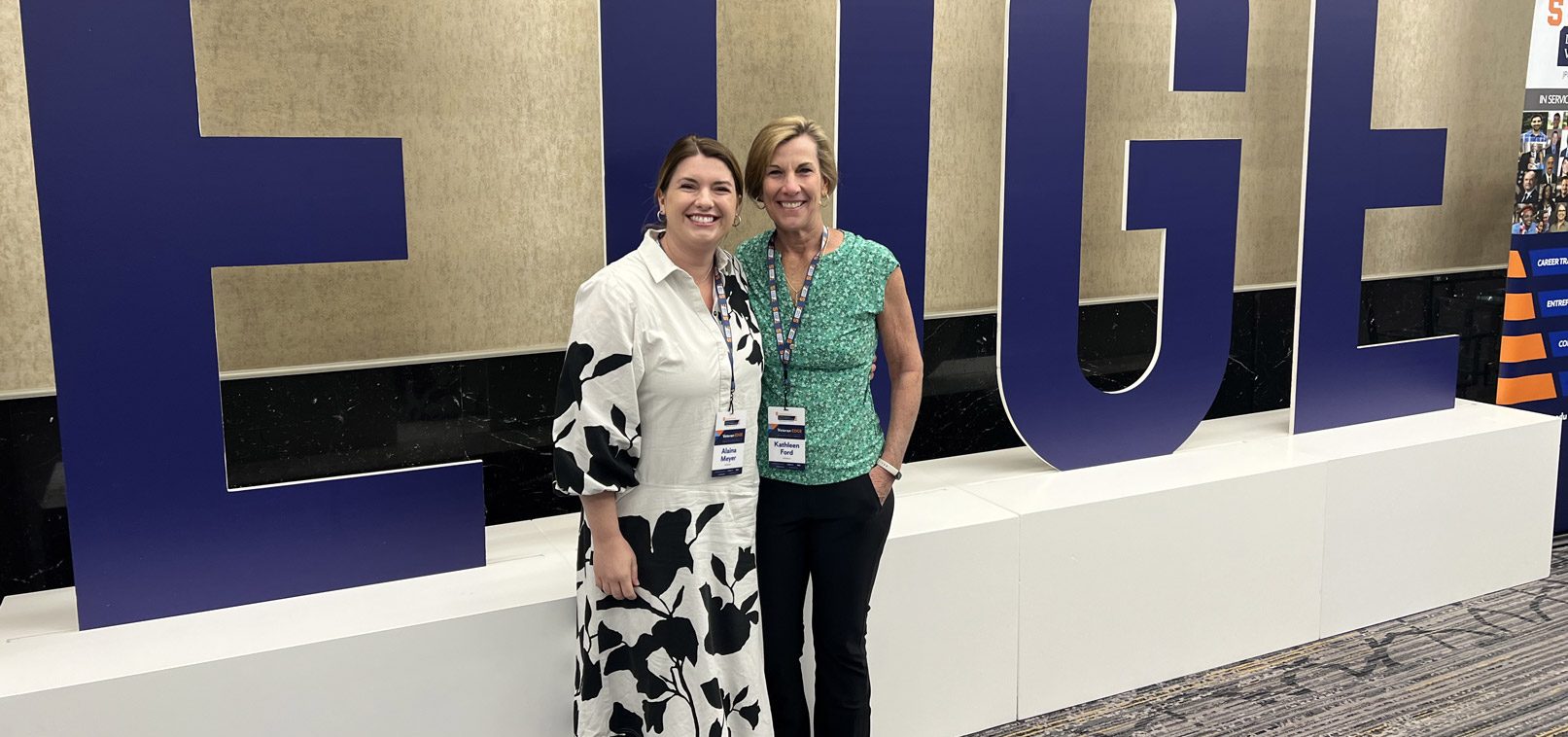
By then, scDataCom was approaching $17 million in revenue, finally nearing the scale commercial banks tend to take seriously. Kathleen knew representatives from JPMorgan Chase would be at the conference.
“I bum-rushed the JPMorgan lady at the Veteran EDGE conference,” Kathleen said, “and just stood in front of her until she’d help me.”
This time, someone listened.
JPMorgan recognized the trajectory and operational strength behind the business. Today, scDataCom maintains a $2 million line of credit alongside the banking relationship and strategic advisory support the company spent years being told it did not qualify for.
The Contract That Forced Them to Scale
In 2018, Kathleen and Alaina submitted a bid for a federal VA contract in New York worth nearly ten times the company’s lifetime revenue at the time.
On paper, scDataCom lacked the past performance profile federal procurement systems typically reward. They submitted anyway. They won.
“It reinforced our legitimacy and ability to scale,” Alaina said.
The contract transformed the business overnight. The company had to rapidly learn how to operate at federal scale, from subcontractor management and compliance systems to payment schedules, staffing demands, and the cash-flow realities of government contracting.
Getting there required persistence and strategic workaround thinking.
“You need past performance to win a contract,” Alaina said. “And how do you get past performance if you can’t win any contracts?”
The answer was teaming agreements, underpricing early projects to establish credibility, and refusing to leave the room when opportunities appeared out of reach.
That kind of resilience is not incidental within veteran-owned businesses. According to the SBA Office of Advocacy, veterans own more than 1.9 million businesses employing nearly 5.5 million Americans. IVMF’s National Survey of Military-Affiliated Entrepreneurs (NSMAE) also found 93 percent of veteran entrepreneur respondents reported their businesses were still operating.
Veteran-owned businesses are often built by leaders trained to adapt under pressure, reassess quickly, and continue moving when systems fail around them. Kathleen and Alaina did not wait for those systems to change. They treated rejection as information and kept building anyway.
What 100,000 Actually Looks Like
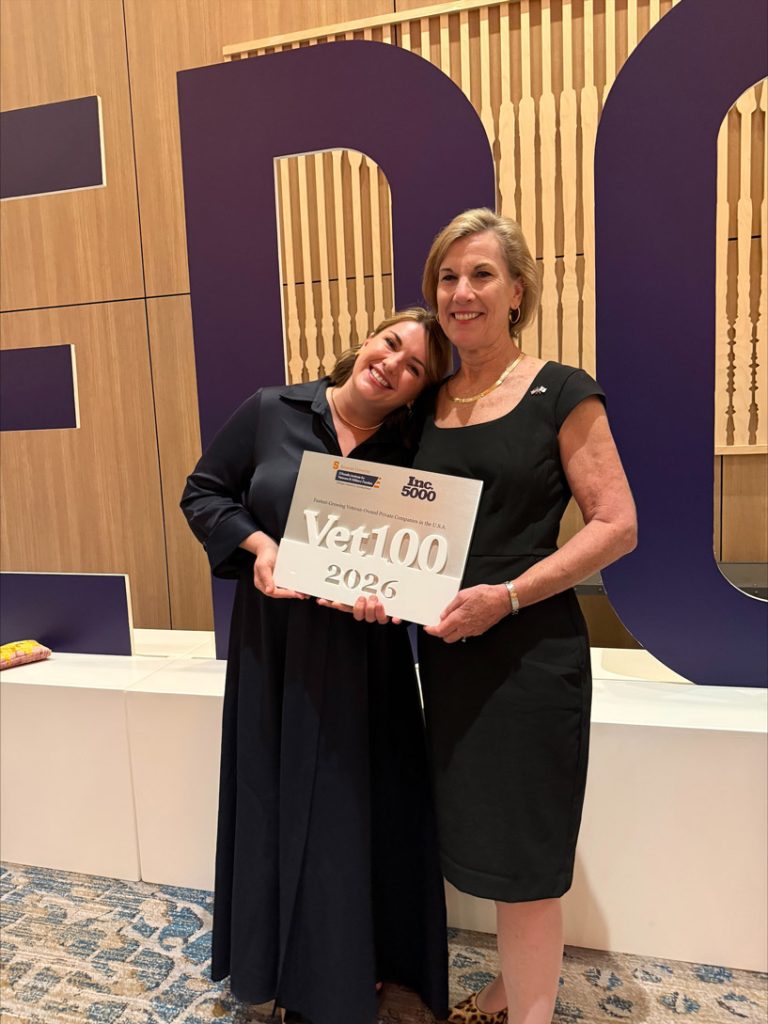 Today, scDataCom employs more than 40 people, more than half of them veterans. The company is certified as a Service-Disabled Veteran-Owned Small Business and Woman-Owned Small Business. It has served clients across more than 37 states, including the Department of Defense and Department of Veterans Affairs, and has earned four consecutive placements on the Inc. 5000 alongside recognition as a two-time Vet100 honoree.
Kathleen now speaks at veteran entrepreneurship events on federal contracting and scaling strategies. Alaina mentors early-stage founders throughout the IVMF network. They have moved from receiving support to helping build the ecosystem for others behind them.
That is part of the point of the 100,000-entrepreneur milestone IVMF is approaching nationally.
The story of veteran entrepreneurship in America is often framed around resilience, but resilience was never the missing ingredient. Infrastructure was.
Kathleen and Alaina are two of more than 100,000 veteran and military spouse entrepreneurs who found access to the education, networks, mentorship, and capital pathways needed to grow businesses that systems initially underestimated. Their story is not a fluke or an exception. It is evidence of what becomes possible when entrepreneurial ecosystems stop asking whether veterans are qualified and start investing in what they are already capable of building.
The banks said no. Certification offices said no. The market underestimated them repeatedly.
They built anyway.
Are you one of the 100,000?
Your story is part of this milestone. Share it with us and help us show what a hundred thousand veteran entrepreneurs actually looks like.
If you are a veteran or military spouse who has been told your skills don’t translate, your business isn’t ready, or you don’t qualify: IVMF’s entrepreneurship programs were built for that exact moment. The qualifications are already yours. Explore the programs and take the first step.