
The Career You Never See is IVMF’s campaign to expose the structural hardships military spouses are up against when it comes to family and career. Military spouses are some of the most educated and deeply capable individuals, yet they face persistent unemployment and underemployment driven by the realities of military life.
Frequent moves, licensing barriers, childcare gaps, and repeated career restarts compound over a lifetime to limit income, stall advancement, and degrade retirement security. These are systemic outcomes, not individual failures, and they carry real costs for families, military readiness, and the national economy.
Data tells that story in aggregate, but these stories are most powerful when heard from the military spouses themselves. Over the coming weeks, we’re publishing guest blogs from military spouses in their own words, sharing what career disruption, invisible labor, and starting over again actually look like from ground level.
by: Alison Bosworth
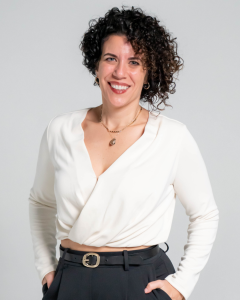
I don’t identify as the “typical” military spouse. I never lived on an Army base, never packed up a house for a PCS move, and never counted down the days until a deployment ended. Yet as the daughter of a Vietnam veteran and the wife of an Operation Iraqi Freedom combat veteran, my life has been shaped by the military and the wars that shaped the men I love.
I met my husband between deployments. His hometown was my college town, a small coal-mining community south of Pittsburgh, Pennsylvania. I was in my first semester of graduate school when a mutual friend invited me out one evening. He was home on leave, and I remember being drawn to how easy it was to talk to him. At the time, I was chasing my dream of a career in the federal government. I had recently completed an internship with the National Geospatial-Intelligence Agency that had introduced me to DoD work, and I was convinced I had my life planned out. He talked about becoming a state trooper once he finished his service, but there was a hesitation in the way he spoke about the future.
“I don’t plan too much,” he said. “I’ve got another deployment coming up.”
At twenty-two, I heard the words but didn’t understand them. I didn’t understand that planning can feel like a luxury when you’ve learned how quickly life can change. I didn’t understand how much we ask of young men and women when we send them halfway around the world to fight wars most Americans only experience through headlines and glorifying movies. And I certainly didn’t understand that when they come home, they don’t come home as the exact same person who left.
For a long time, I thought military service was something that happened in chapters. You enlisted, you served, you deployed, and eventually you came home. The story ended, and a new one began.
What I know now is that military stories don’t end that neatly, they never really end—not for the service person, and not for their families.
Nearly twenty years later, I can look back and see how military service quietly threaded itself through our marriage, even though I met my husband after much of his service was already behind him. On paper, we built a successful life. I achieved my goal of working for the FBI. We got married, bought a home, two dogs, and a fenced yard. We checked the boxes that should have signaled stability and success. From the outside, things looked good.
Behind closed doors, however, we were carrying far more than either of us knew how to name.
 At the time the signs didn’t seem so obvious. He denied having PTSD or survivor’s guilt, but they were there. The hypervigilance, irritability, night terrors, inability to truly relax, self-medicating with alcohol. The feeling that life was something to endure rather than enjoy. Looking back, I can see how both of us were living in survival mode, in very similar yet different ways.
For years, I thought those struggles belonged to him. After all, he was the combat veteran. He was the one who deployed. He was the one who carried the memories. What I didn’t realize was that trauma has a way of extending beyond the person who experienced it firsthand. It settles into relationships, shaping communication, influencing decisions. It changes the emotional climate of a home. Without realizing it, I had begun organizing parts of my life around managing things, anticipating them, and trying to prevent outcomes with detailed control. I thought I was helping him carry the weight. What I didn’t recognize was how much weight I had picked up myself. All very similar to the dynamics I witnessed and learned at home growing up with a veteran.
Eventually, everything came apart. When people say, “things fell apart,” they usually mean one area of life. For us, it felt like every area at once. My career, our finances, our marriage. It felt like the life we had spent years building had caught fire, and all we could do was watch it burn.
Oddly enough, being able to say that now feels less painful than it once did. Because standing on the other side of it, I can honestly say it was one of the best things that ever happened.
When everything burns down, you stop wasting energy protecting what isn’t working. You either rebuild or you don’t. Fortunately, before the collapse was complete, we had started putting support beams in place.
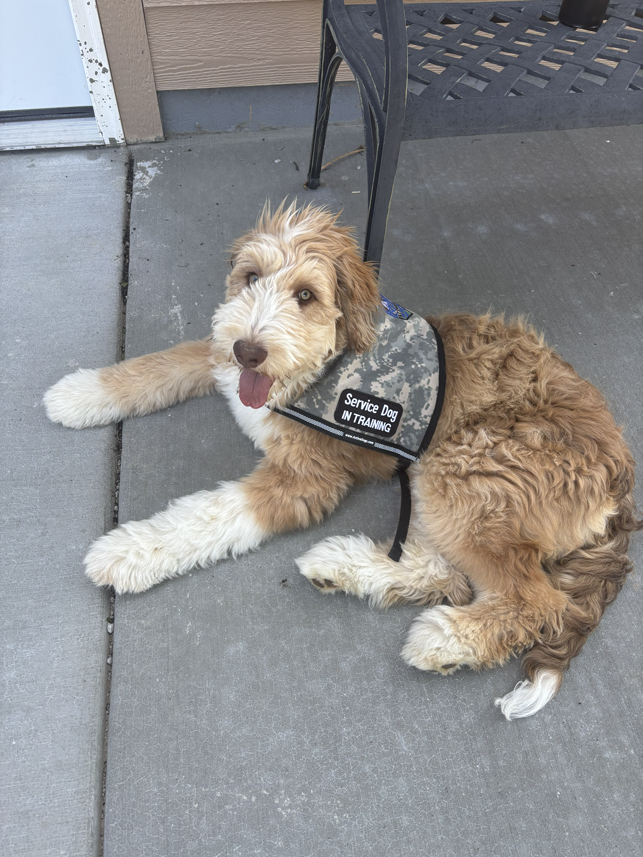 He chose sobriety, then I did. We prioritized our mental health and therapy. We started having conversations neither of us wanted to have. We took responsibility for our mistakes instead of waiting for the other person to change first. We began the slow, frustrating, humbling work of healing.
I say “we” intentionally because one of the biggest lessons I learned is that the impact of war on families isn’t discussed nearly enough. We talk about deployments. We talk about reintegration. We talk about military spouses sacrificing careers and moving across the country every few years. Those stories matter.
And there are also people like me, who met their veterans after their service.
There are spouses who inherit the aftereffects without ever experiencing the deployment. There are spouses who spend years wondering if what they’re experiencing is normal. There are spouses carrying guilt because they know their loved one endured things they can’t imagine, yet they are struggling too.
One of the most healing experiences I had was volunteering with a nonprofit that provides service dogs to veterans and first responders with PTSD. For the first time, I found myself sitting with women who spoke openly about what life was actually like. Not the polished version, the real version. They talked about loneliness, resentment, exhaustion, and even feeling guilty for struggling. And as I listened, I realized our story wasn’t unique. More importantly, I realized I wasn’t failing. I wasn’t a bad spouse because I found it hard. I wasn’t selfish because I wanted support too. I wasn’t weak because I needed to heal myself.
I began recognizing another truth that would eventually change not just the course of my life but my purpose.
Growing up as the daughter of a Vietnam veteran, I learned situational awareness before I was old enough to understand the term. My dad taught me how to pay attention. He taught me to trust my instincts. He taught me how to anticipate danger. Before I entered grade school, I was learning lessons that only a man who survived the jungles of Vietnam could teach.
Later, I earned a black belt in martial arts. Then I spent years in federal law enforcement. By every measurable standard, I knew how to protect myself.
 Yet somewhere along the way, I realized I felt safer navigating the external world than I did living inside my own body. I trusted my ability to assess a threat, to respond in a crisis. I trusted my ability to protect others, yet I wasn’t nearly as skilled at trusting myself.
Healing forced me to confront that. It taught me that safety isn’t only about what happens around us, it’s also about what happens within us. It’s the relationship we have with ourselves. It’s our ability to listen when something feels off, to honor our limits, to believe our intuition, to voice our needs, our truth, and to know that our worth isn’t tied to performance, productivity, or how much we can carry (to be fully transparent, I’m still working on this). That understanding eventually became the foundation of the work I do today.
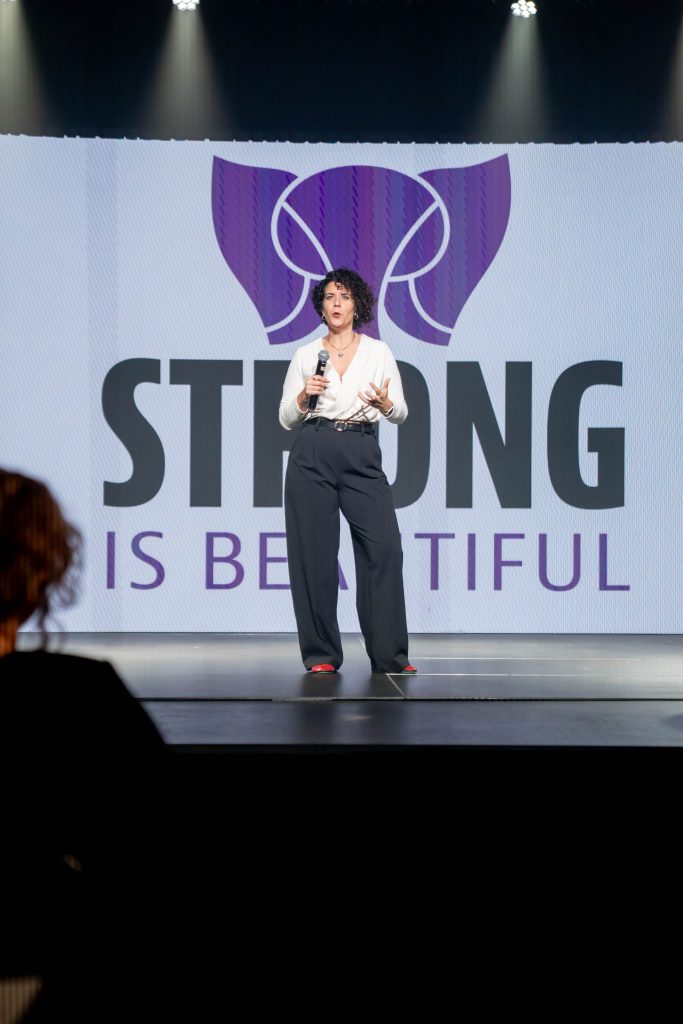
I started Strong is Beautiful because I realized that true confidence isn’t built solely through external skills. Knowing how to defend yourself matters. Using your voice matters. Setting boundaries matters. But there is another layer beneath all of that. A woman who doesn’t trust herself will always struggle to feel safe, no matter how prepared she is.
The irony isn’t lost on me. I’m the daughter of a veteran, the wife of a veteran, a former FBI analyst, and a martial artist. For years I believed strength was something you demonstrated. Today, I think strength is something you cultivate.
When I look back at my journey as a military spouse, I no longer worry about whether I fit the traditional definition. I never lived on a base. I never waited through deployments. I simply choose to love a man whose military service continued shaping his life long after the uniform came off, and in turn, it shaped mine.
What I’ve learned is that healing doesn’t happen in isolation, in saying things are fine when they aren’t, pretending it will all be okay if it’s not talked about. It happens in relationships. It happens in families. It happens when people decide that surviving is no longer enough and begin the work of truly living by being honest and speaking their truth even when you don’t know how it will turn out. And perhaps the most important lesson of all is this: supporting someone else’s healing does not require abandoning your own.
Alison Bosworth is the founder of Strong is Beautiful, where she helps women and girls develop confidence, self-trust, and personal safety skills through her Protectress Method framework. A former FBI analyst, corporate executive turned safety educator, Alison’s work bridges external readiness with building internal safety as a way to cultivate ‘body wisdom’ and lead a more aligned life. She lives in Colorado with her husband and two dogs, and is currently completing a master’s degree in Ayurveda and Integrative Medicine.
The views and experiences shared in these guest blogs are the authors’ own and do not necessarily reflect the positions of IVMF or Syracuse University. We’re grateful to each contributor for their honesty and for trusting us with their story.
Learn more about the professional and personal challenges military spouses face on a daily basis at IVMF’s The Career You Never See.