
Have you ever felt stuck in your career or business? Are you hitting a wall when it comes to understanding how to get better at what you do, or unsure what the next steps on your path are? Sounds like you’re in need of some mentorship. So, since January is National Mentoring Month, let’s talk about it.
What is a Mentor and How Do They Help?
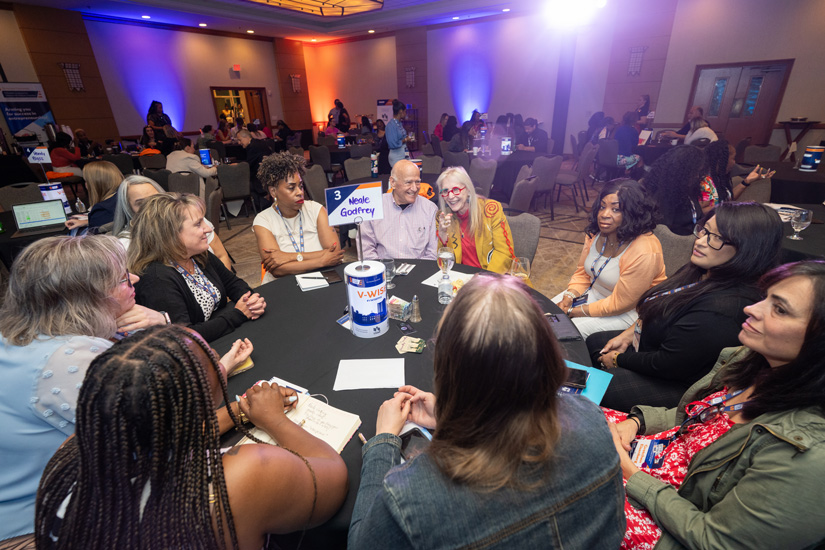
Neale Godfrey at V-WISE office hours mentoring participants.
A mentor is someone a little, or even a lot further down the path you see yourself on. They’ve already overcome a lot of the obstacles you’re facing in your business or career, and can offer their perspective on those obstacles and help you advance.
The important part here is that they have personal professional knowledge of your industry and role, because they were in your shoes and are at least five or more years further down the road in a direction you want to go. This is what separates their thoughts on an issue from your childhood friend or favorite uncle. They know the specifics of what you’re struggling with because they’ve faced the exact same thing. They don’t have to abstract the problem very much to give advice, they’ve experienced that problem personally.
This unique ability to give industry-specific, actionable advice and perspective is the great power of a good business or career mentor. They speak the industry jargon fluently. They have an even larger view of the industry than you, and more experience operating at a higher level than you’ve achieved so far.
Who do I want as a Mentor?
You might think you want the very best, or the wealthiest, or the most famous person in your industry as your mentor. To be sure, anyone at the top of a given industry probably has a lot of knowledge and perspective to pass down. However, they’re not necessarily the best mentor for you (though they probably have a network that would be pretty great to have access to).
You need a mentor who can help you get to the next step for your career or business, or perhaps the next several steps. They’re going to do that by listening, empathizing, giving advice, and eventually making introductions.
Ultimately, just a few factors matter in selecting a business or career mentor to pursue. They don’t necessarily have to check every single box to be a good mentor, but if they check fewer than half, they might not be a good fit, or they might not be a good fit for very long. And that’s okay. Sometimes the mentor you need is only a mentor for a short time before they become a peer, or just part of the story that got you where you are.
- Is there chemistry? Do you get along? Is this someone you want advice from? Are they someone you will hear when they tell you something hard? They might not be right 100% of the time, but if you’re not listening, you aren’t with the right mentor.
- Do they have time for you or seem interested in making time for you? Do they seem to enjoy your company, or do they act like you’re bothering them? Do they listen to you, or just talk? Do they actually answer your questions and point you in a productive direction? Do they seem to care about you succeeding in your goals?
- Are they knowledgeable, well-positioned, and ahead of you in your industry? Are they someone who seems to have a good handle on the problems you’re facing in your industry? Are they where you want to be in 5, 10, or even 15 years? Do they seem to have some wisdom to offer about how to get there that resonates with you? Do they seem to have a strong network they could pull you into?
- Are they natural teachers? Your mentor needs to be a good communicator who can explain their choices and thought processes. They need to be able to explain things in a way that helps you navigate your career or business toward success.
- Are they still growing? Some mentors can grow with you, remaining a few steps ahead of you on the journey for a lifetime. Others are more like lighthouses. They help you stay off the rocks while you pull even with them, but are unable to help you much when it comes to growing past them. You should occasionally re-evaluate your mentors, and see if you’re still pointed in the same direction.
Where to Find a Mentor
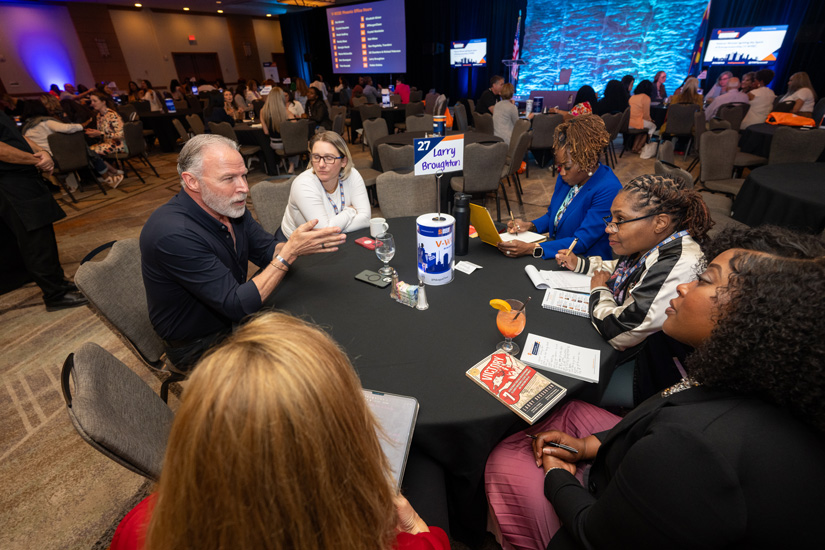
Larry Broughton at V-WISE office hours mentoring participants.
There’s no “one way” to find a mentor. Finding the right mentor is kind of like finding a spouse. Some people approach it with a lot of intentionality, and there are a few systematic ways you can search for a mentor if that’s who you are, particularly searching for mentorship matching groups and websites, like SCORE. There are also a million organic ways you can find a mentor. Some of the most common places are:
- At Work: Depending on how many employees there are, your workplace might already have the perfect mentor waiting for you to reach out.
- At Conferences: There are speakers, authors, experts, and leaders all over the place at conferences specific to your industry. Start attending those within reach. Become a part of the industry’s active community. You’ll cross paths with dozens of potential mentors.
- At Industry Mixers: Similar to conferences, these tend to be more local and regular events, and typically less formal. Searching for events online in your area for your industry should provide an option or two.
- Online: Social media is a great place to find a mentor, especially if you’re looking for someone within a specific niche or life experience.
- Mentor Organizations: There are several organizations built solely to connect mentors and protégés. We like American Corporate Partners, which seeks to connect veterans and military spouses with mentors from over 1,800 organizations.
Where is All this Mentoring Happening?
Where mentoring happens can be different for each mentor. It could happen more formally over a meeting for coffee, lunch, or drinks. It might be a series of back-and-forth emails or social media messages. It could be brief walk and talks between work meetings or at a few annual industry conferences. It might even be over a game of pickleball or some other after-work activity. Mentoring can be a formally scheduled event, or it can happen in small bits and bursts. What works best for you and your mentor is going to be something you both find together.
How Do I Ask Them To Be My Mentor?
Mostly you don’t. That’s weirdly formal, and it creates awkwardness and pressure. Instead, you just ask them if you can “pick their brain” about X industry-related thing, or if you can buy them a coffee and ask them about a choice they made or a thing they accomplished.
You keep the stakes low, ask for a small window of their time to have that first conversation, and you let it grow naturally from there. Asking a stranger to be your mentor is like asking a stranger to be your best friend or to marry you. Just ask for the first date and see how it goes.
At some point six months, a year, a few years down the road, when you’ve hit that goal you originally set out to achieve? When you’re making that gratitude/humblebrag post on LinkedIn and saying your thank-you’s? You might tag them, thank them for all the time and belief they put into you, and say you consider them an important mentor, and without them this goal might have taken much longer or remained out of reach.
Pitfalls to Avoid

Two participants at Veteran EDGE discussing business.
There are some common mistakes people make when seeking out a mentor. Some awareness can help you avoid embarrassment, wasted time, or even burnt bridges.
- Don’t seek out your direct competition. If you’re competing with them, they’re more of a peer. It’s also against their interests to help you too much. You want someone within your industry, though, someone who speaks the language and understands the specifics and your path. They should just be enough steps ahead of you that you aren’t competing for the same business or roles.
- Don’t expect opportunities or connections, especially early on. It takes time for a mentor to see who you really are, and know you’re someone they’d trust with their own reputation before they start vouching for you and bringing you into their network. If you come off entitled or pouty, you might find your mentor less and less responsive.
- Don’t treat your mentor like a therapist. They’re not there to whine to, or to help you learn to regulate your own emotions. That doesn’t mean they shouldn’t listen and show empathy when you’re struggling, or that you can’t connect professional challenges with emotions. Just remember they’re ultimately there to help you solve the professional challenges, not the emotional ones. We all have rough patches, but if you’re just dumping emotional baggage, they might not stick around.
- Don’t forget how busy they are, and that they have needs too. Your mentor can’t center you on your schedule at all times. They’re the person helping you, so you really need to be flexible to their schedule rather than the other way around. If you’re with them at a conference walking the floor or attending a mixer together, make sure they have space to have conversations above your current level. They’re probably there to try and grow too, not just help you.
What are Mentors Getting Out of This?

CEOcircle participants discussing business during a roundtable workshop.
Having a mentor might seem too good to be true. Why would someone put all this time into helping you without charging you or some ulterior motive? What’s the catch?
Well, it turns out mentors get a lot out of mentor-mentee relationships, too. Mentoring is also a way to cultivate a trusted team or build a platform. Your mentor might want to put together a board for their next business, or build a team for their next management position, and you might be the person they need. Or, they might just enjoy having someone who listens to what they have to say, and enjoy being helpful and passing on what they’ve learned.
But mostly, when mentors give you advice, it’s forcing them to think about how they accomplished certain things in their own career or business and putting them into words or actionable steps. This helps them organize and even systemize their own thoughts in a way that benefits them in their own work.
Mentees can also challenge these ideas and force the mentor to refine and better their own thinking, and offer new perspectives from the bottom that help mentors stay current on their industry. Mentoring is absolutely a two-way street.
Find Your Mentor With IVMF
IVMF programs bring together communities of veterans and military spouses looking to advance their careers and businesses.
Find a Business Mentor
Our entrepreneurship program portfolio is packed with programs that create opportunities for you to meet potential mentors. No matter if you’re attending Veteran EDGE or the V-WISE capstone conference, or taking an online program like Military Founders Lab or going to in-person courses with EBV or STRIVE, you’ll meet fellow veteran and military spouse entrepreneurs who have been where you are and found success.
Find a Professional Mentor
Launch your new career with Onward to Opportunity! Not only will you graduate with a professional certification in your field, you’ll have free access to our career coaching services. These early mentors can help you take your first steps into your new industry and put you in a position to meet with not just job offers, but potential mentors.