2025 Military Family Lifestyle Survey Results

Community, Transition Needs, and Family Financial Situation


Cover of the IVMF MFLS report.A Collaboration: Since 2009, the Blue Star Families (BSF) Military Family Lifestyle Survey (MFLS) has collected annual responses from military families on critical issues. The D’Aniello Institute for Veterans and Military Families at Syracuse University (IVMF) has collaborated with BSF in this research effort since 2014. In 2025, the MFLS received responses from more than 6,000 military-connected individuals, including 2,846 veteran family respondents (veterans and veteran spouses who completed the survey). The results below, developed by IVMF, focus on post-service outcomes for veteran families, including transition experiences, financial stability, and community connection. The full report includes more details about the survey and additional findings on active-duty and National Guard/Reserve families.

2025 MFLS Veteran Finding: While most veteran family respondents were doing well financially, 27% indicated they were “finding it difficult to get by” or “just getting by.” Veteran families who reported a difficult transition later reported proportionally worse financial situations and higher rates of food insecurity.

See the Veteran and Transition Finding

Military to Civilian Transition: Resource Needs and Long-Term Implications


The Transition Experience

In the 2025 MFLS, 58% of veteran respondents described their overall transition from military to civilian life as “difficult” or “very difficult.” Additionally, 41% assessed that they were either “somewhat unprepared” or “very unprepared” to successfully navigate this transition. Among all veteran respondents, 48% felt the experience met their expectations, but 44% found it more difficult than expected.

How Long Does Transition Take for Veteran Respondents?

37%
Up to 1 year
19%
1 to 3 years
8%
3 to 5 years
5%
More than 5 years
10%
I still feel in transition
21%
Never ends – it’s a lifelong journey

Unmet Resource Needs During Transition

Among veteran family respondents who transitioned in the last 10 years, the areas with the highest unmet needs included:

  • Housing Services or Assistance: 67% who needed it didn’t get it
  • Caregiving Resources: 74% who needed it didn’t get it
  • Financial Planning and Management: 59% who needed it didn’t get it

While fewer veteran family respondents sought these resources during transition, many who did need them indicated they did not receive them — a significant gap. Possible reasons for this shortfall may have been that “housing” and “caregiving” needs may not have been emphasized in transition programs. Additionally, because housing and caregiving resources often existed within other social support systems with needs concentrated at state or local levels, resource navigation could be challenging for those seeking support.

Long-Term Financial Implications


Possible long-term impacts of military transition are manifold, particularly regarding financial situation and family stability.

Veteran Family Respondents with ‘Difficult’ Transitions

Finding it difficult to get by
14%
Just getting by
25%
Doing okay
41%
Comfortable
19%

Veterans Family Respondents with ‘Smooth’ Transitions

Finding it difficult to get by

5%

Just getting by
12%
Doing okay
37%
Comfortable
46%

Food Security and Transition Difficulty

  • Of those who reported a ‘difficult’ transition: 33% had low or very low food security in the 12 months preceding the survey.
  • Of those who reported a ‘smooth’ transition: 14% had low or very low food security.

Of those who reported a “difficult” transition process, 39% indicated they were currently “just getting by” or “finding it difficult to get by” financially. This demonstrates the lasting impact that a challenging transition can have on veteran families’ economic stability.

Community Support and Concerns for the Future


Top Issues of Concern

When asked about top issues of concern, veteran family respondents indicated:

54%
Access to military/VA healthcare
40%
Understanding of military/veteran issues among non-military communities
39%
Military benefits
36%
Veteran employment

Views on Public Support

Only 41% agreed that the general public would be prepared to support military families if the U.S. engaged in a major conflict. These sentiments were unsurprising given that only 18% of veteran family respondents believed the general public is well-informed about global affairs.

When asked about support for veterans and military families by the general American public, less than half (46%) of veteran family respondents were confident that veterans and their families will receive the long-term support they need. In fact, 23% believed that “veterans and their families will be increasingly overlooked.”
Local Community Connections

Despite this seemingly negative outlook about broader public support, veteran family respondents generally felt positive about their local communities:

  • 55% are likely to share their military experience with a neighbor
  • 85% feel safe in their communities
  • 77% trust their neighbors

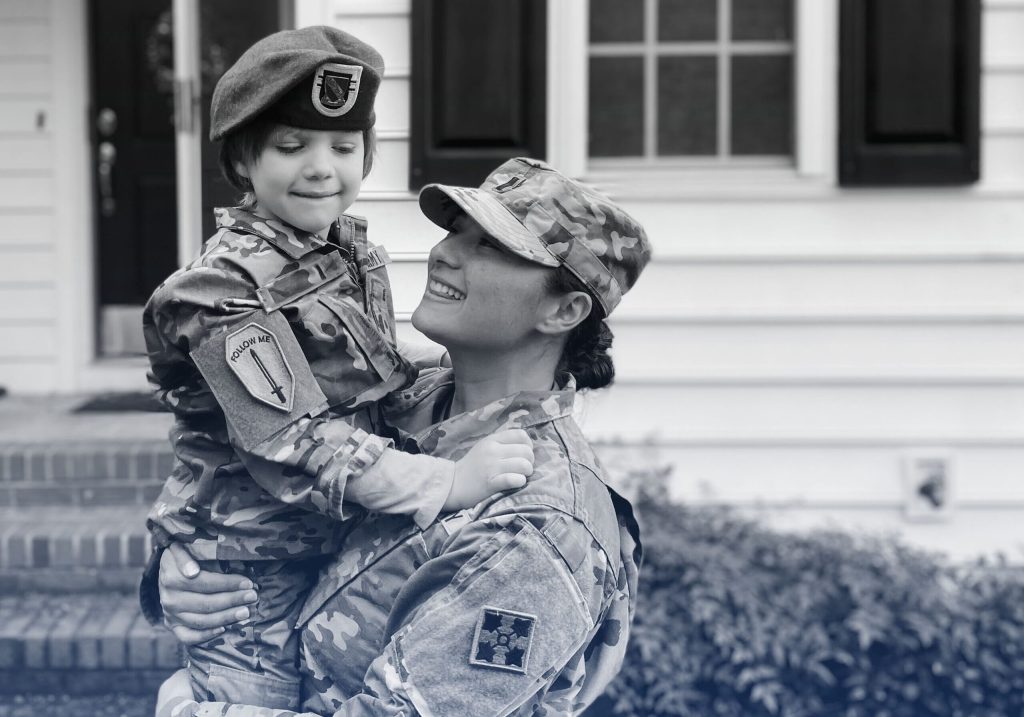
A women soldier in uniform holding her son dressed in a mini uniform.Impact of Sense of Belonging

Veteran family respondents who reported a sense of belonging to their local community were more likely to feel safe and trust their neighbors.

Among those with a strong sense of belonging:

  • 96% feel safe where they live (vs. 61% without sense of belonging)
  • 91% trust their neighbors (vs. 47%)
  • 79% agreed that neighbors appreciate military sacrifices (vs. 31%)
  • 62% agreed that neighbors are prepared to support military families in a major conflict (vs. 18%)

See The Full Results