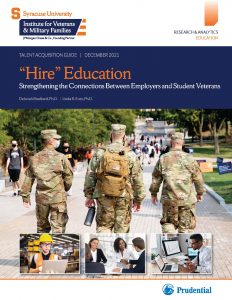
There are many advantages for veterans when employers enact a skills-based employment strategy. Veterans bring unique skills and attributes to the workforce, many of which are critical today and expected to be increasingly sought after in the future of work. Skills-based employment opportunities can benefit both employers and veterans.
The Changing Nature of Work
Today’s jobs are dynamic and require durable skills such as problem solving, agility, teamwork, and leadership – all skills developed during military service.
In this new model of work, veterans have an advantage if they can effectively develop and communicate these critical skills to potential employers.
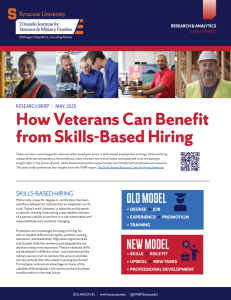
- • DEGREE ▶ JOB
- • EXPERIENCE ▶ PROMOTION
- • TRAINING
- • SKILLS ▶ ROLE FIT
- • UPSKILL ▶ NEW TASKS
- • PROFESSIONAL DEVELOPMENT
Top Skills Rated as Increasing in Importance
2023-2027 by Employers
Source: Employer Survey Data 2023-2027
Hiring Veterans for Skills
Companies that are successfully developing skills-based employment models focus on:
-
- Skills-based recruiting for new hires
- Skills-first talent development for current employees
Veterans are well-positioned for these opportunities because they already possess in-demand skills such as critical thinking, problem solving, leadership, and flexibility. Veterans have a strong work ethic and are already accustomed to technical training and personal determination in seeking their educational and career goals.
Employers looking to recruit and retain veterans should:
- Identify adjacent skills across various roles and jobs.
- Create a skills-based architecture to support analytics and fairness in hiring.
- Map skills to talent needs and reward skills according to their value to the organization.
- Foster a learning culture that aligns with veterans’ career goals to improve retention.
Opportunities for Veterans
To realize these opportunities, veterans should:
- Learn how to effectively communicate the skills they already have to employers.
- Leverage veteran-focused employment resources to get formal credentials that communicate their existing skills, or to develop new ones for their intended career.
Are you a veteran looking to develop or learn to effectively communicate your skills? Check out IVMF’s Onward 2 Opportunity program: https://ivmf.syracuse.edu/programs/career-training/