
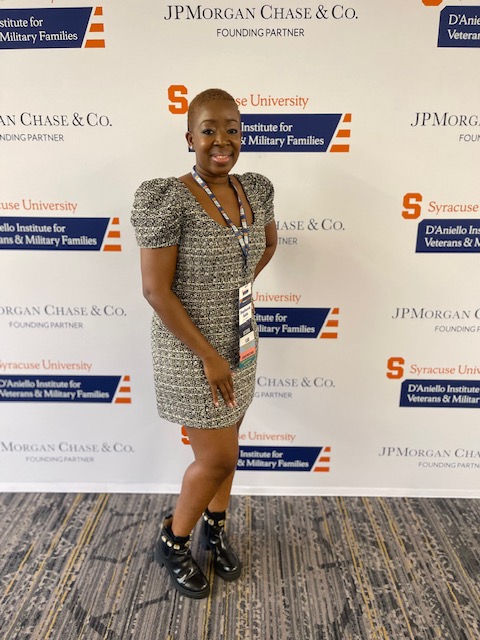
 Going back to work meant paying for childcare for her young son, which would cost the entire paycheck. Her solution? She spent seven years building a childcare business in the Bronx that would become Scholars of the Future Educational Center.
She started with a home daycare after her son was born. It grew quickly, and she even worked with the city and provided care for children in homeless shelters, and eventually served hundreds of children.
Stephannie loved helping families and serving the children of her city, even if it meant working 60 to 80 hours a week and driving to pick up and drop off some of the children. For the families she served, her program was a lifeline.
And her efforts didn’t go unnoticed. She earned three congressional citations for her impact and even received an honorary doctorate from CICA International University and Seminary for her service to children.
The city repaid her with long payment processing delays, sometimes taking two to three months. Her rent and payroll couldn’t wait that long. When she tried to expand into an after-school program with a licensed commercial space, the licensing process dragged on so long it bankrupted her before the doors fully opened. The bureaucracy didn’t just slow her down. By the end of 2014, it shut her down.
And it wasn’t just Stephannie’s business. Not long after she closed, the NYC regulatory hurdles contributed to closing 971 childcare programs between 2019 and 2023, and providers described the system as “plagued by red tape and bureaucracy”.
What Stephannie didn’t know yet was that the federal government would eventually become her biggest customer.

 By the time Stephannie finished IVMF’s EBV Accelerate, the path was clear. She wanted to launch a government contracting business providing janitorial services. It had a low barrier to entry, better margins than childcare, and contracted income she could count on. She started testing it in late 2019, doing rental turns with her husband. These were just small jobs where she could learn the work. When she was ready, she registered ACJ Luxury Maintenance, named for her three children’s initials, on March 13, 2020.
Three days later NYC shut down schools, the COVID-19 Pandemic had arrived in full force. Despite the tragedy, Stephannie was positioned to help. A prime contractor she’d met at Veteran EDGE had a federal contract to provide janitorial services for VA hospitals across Brooklyn, Manhattan, and Queens. He needed a team immediately.
Stephannie assembled 50 people in three days, partnering with ADP for payroll. She structured the whole operation with a chain of command not unlike the Army. Floor workers reported to floor leads, leads to supervisors, and supervisors directly to her. It was the only way to manage 2.7 million square feet of healthcare facilities across three boroughs during a pandemic nobody understood yet.
That first contract lasted about a year and a half. She expanded to the FAA, cleaning an airport traffic control tower. ACJ crossed a million dollars in revenue in its first year. While companies across the country were closing, Stephannie was hiring and keeping families employed at a good wage. Some of her workers were able to buy homes. Others got out of debt.

Today ACJ Luxury Maintenance operates several contracts across the New York and northern New Jersey metro area, with a mix of government and commercial clients, generating $2 to $3 million in annual revenue. The company provides janitorial services, light construction, power washing, and facility maintenance with a team of 10 employees and four subcontractors.
Stephannie’s consistent effort and growth earned her a spot among the ‘Cuse 50, an award given to the fifty fastest-growing veteran-owned businesses among Syracuse University and IVMF alumni. Now, she’s pushing further into commercial work, where relationships last longer and she doesn’t have to re-compete every contract cycle.
Beyond ACJ, Stephannie is also the founder of Champs for Autism, a nonprofit she started in honor of her firstborn son, who was diagnosed with autism at two years old. The organization has provided recreational and educational activities to hundreds of families with loved ones on the spectrum. She paused the nonprofit’s events during COVID, but as ACJ grows, she’s looking to bring that social mission back and integrate it into the company’s next chapter.