
The Career You Never See is IVMF’s campaign to expose the structural hardships military spouses are up against when it comes to family and career. Military spouses are some of the most educated and deeply capable individuals, yet they face persistent unemployment and underemployment driven by the realities of military life.
Frequent moves, licensing barriers, childcare gaps, and repeated career restarts compound over a lifetime to limit income, stall advancement, and degrade retirement security. These are systemic outcomes, not individual failures, and they carry real costs for families, military readiness, and the national economy.
Data tells that story in aggregate, but these stories are most powerful when heard from the military spouses themselves. Over the coming weeks we’re publishing guest blogs from military spouses in their own words, sharing what career disruption, invisible labor, and starting over again actually look like from ground level.
by Sabina Lyszczarczyk
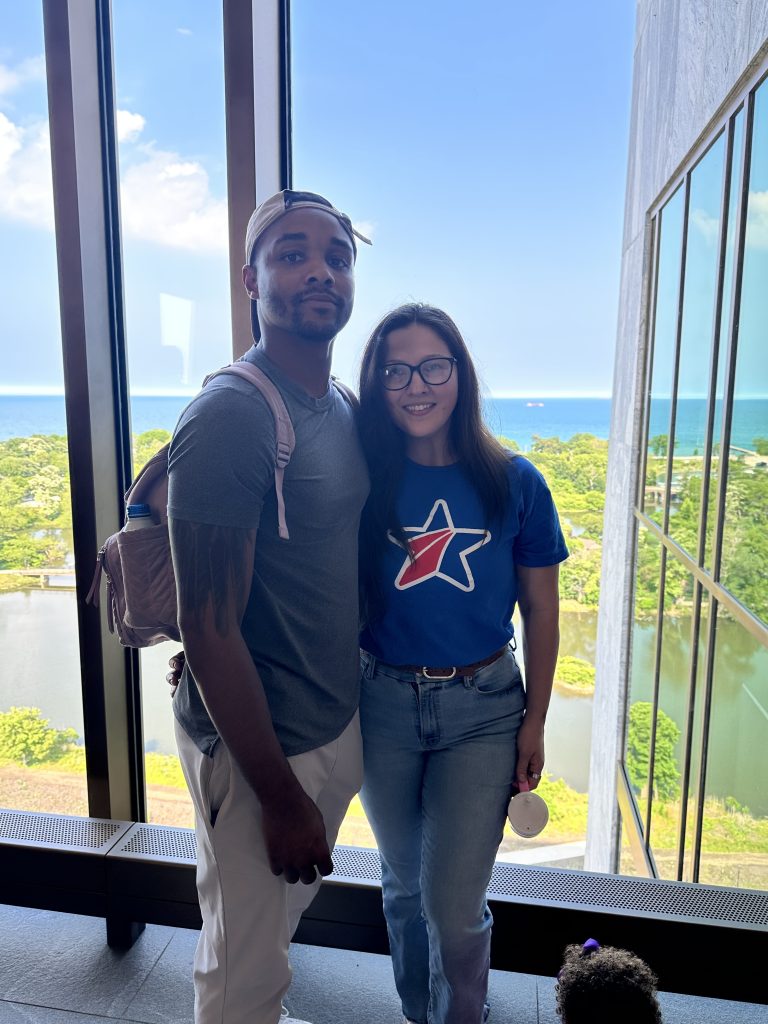 When my husband told me he was going to deploy to a combat zone, I was six months pregnant and unsure I was ready for motherhood. He is the nurturing one. Fatherhood came to him naturally in a way I was still catching up to. Suddenly, the person I counted on to figure all of that out with me was leaving.
I did not want to raise a child alone, and I did not want my other half somewhere unknown, in a region I could not name and was not allowed to research without spiraling. I went into that season terrified. Most of what you read about military spouses skips right past the part where fear came before strength.
I have been a military spouse for just two years. What started as a nine-month deployment became 12 without warning, and nobody sends a formal apology for the difference. In those 12 months I gained gray hairs, a recalibrated sense of my limits, and an intimate familiarity with Murphy’s Law. The world does not wait.
Promoted Without a Ceremony
 It is not just that your person is gone. Your whole life reorganizes around their absence. Every decision, every logistics problem, every 2 a.m. moment of not knowing what to do and having no one to call falls to one person. No backup. No battle buddy. Just you, and a to-do list with no end date.
I carry what feels like undiagnosed anxious perfectionism: always planning, always anticipating, always three steps ahead of a problem that has not happened yet. In an ordinary season, that is a feature. During a deployment to a volatile region, where you learn which news sources update most frequently and hold your phone differently every time it buzzes, it became something I could not turn off. When the nine-month mark passed and the timeline became 12, I absorbed it the way I had learned to take most things that year: kept moving and told everyone I was fine.
Sometimes dinner was frozen pizza. Sometimes I cried in my car because the day had taken everything I had and there were still three hours left. That is not weakness. That is someone doing their absolute best while refusing to say so.
High-Functioning Does Not Mean Fine
The part I was not prepared for was noticing the gaps. Not memory loss, but the slow realization that I had been so consumed by managing and anticipating that I was not present for my own life. My daughter would do something I should have laughed at, and I would catch myself realizing I had already moved on to the next problem.
Researchers call this protective buffering: military spouses absorb their own distress rather than risk adding to what their service member is carrying. We perform okay. We say “I’m fine.” As one recent survey found, 51% of active-duty spouses reported higher-than-normal stress levels while still meeting every external responsibility. Eventually you lose track of the difference between performing okay and actually being okay.
The Career Tradeoff Nobody Talks About
 Before deployment, I had built an identity I was proud of across two federal agencies. At USCIS I worked inside a high-volume, high-stakes immigration environment. From there I moved to the FBI: facilities operations, complex stakeholder coordination, a TS/SCI clearance. I had trajectory. I had a version of myself I had worked hard for and genuinely liked.
Deployment forced me to choose between versions of that self. Maintain my FBI trajectory with a two-hour one-way commute while solo parenting. Leave the workforce entirely. Or accept an entry-level private-sector role that did not reflect my experience but would let me stay employed, cover childcare, and function. None of those choices felt good. They just felt like the only options I had.
Here is the part I rarely say out loud: staying in the workforce was also about fear. The fear of the career gap I would one day explain in a room where someone might pause and decide I had been away too long. Every year out of the workforce is a year behind on savings and the future I am afraid of not reaching. The anxiety was real across all of it.
Walking away from the FBI felt like losing a piece of myself. Today I work in project coordination at a forensic engineering firm, supporting a team of consultants across complex technical cases. The scale shifted; the skills did not. On paper, a different path. Emotionally, some days it still stings. parallel to that new role is the pursuit of an MBA I am finishing one late-night session at a time.
My Problem With the Word “Resilience”
The word people reach for, almost without fail, is resilient. I have complicated feelings about that now. Resilience is often what people call us when it is easier to admire our endurance than to reckon with how little support exists for us. Being called resilient does not build childcare infrastructure, replace lost income, or acknowledge that running a household alone indefinitely is genuinely unsustainable.
Research published by Purdue University identifies several myths worth naming. Resilience is not a fixed trait, not the same as doing everything alone, and not about never wanting to quit. According to researchers, true resilience involves flexibly adapting toward a long-term goal and reaching for support when you need it. Asking for help is not a failure of resilience. It is how resilience works.
Then there is the stigma: the pity looks, the “you chose this” comments. I chose who I spend my life with. I married the man, and I accepted the uniform. I made those sacrifices willingly because I know he would do the same for me. That is the deal we made. But calling us resilient is not a substitute for systems that actually support military families.
The Long Work: Anger, Resentment, and Choosing Gratitude
I spent a real portion of this deployment angry. The career grief, the anxiety, the invisible labor, and the frustration of being celebrated for enduring something that should not require this much endurance: it was a lot to carry, and for a while I did not try to move it. Anger felt honest, because it was.
Getting to gratitude was a practice, and some days a grinding one. I went into this deployment sad, angry, and terrified. I am coming out tired, yes, but sanguine in a way I did not expect. Somewhere in the middle of managing everything imperfectly, I let go of needing to manage it perfectly. The deployment took that pressure from me, and I am honestly glad.
Finding Your People Changes Everything
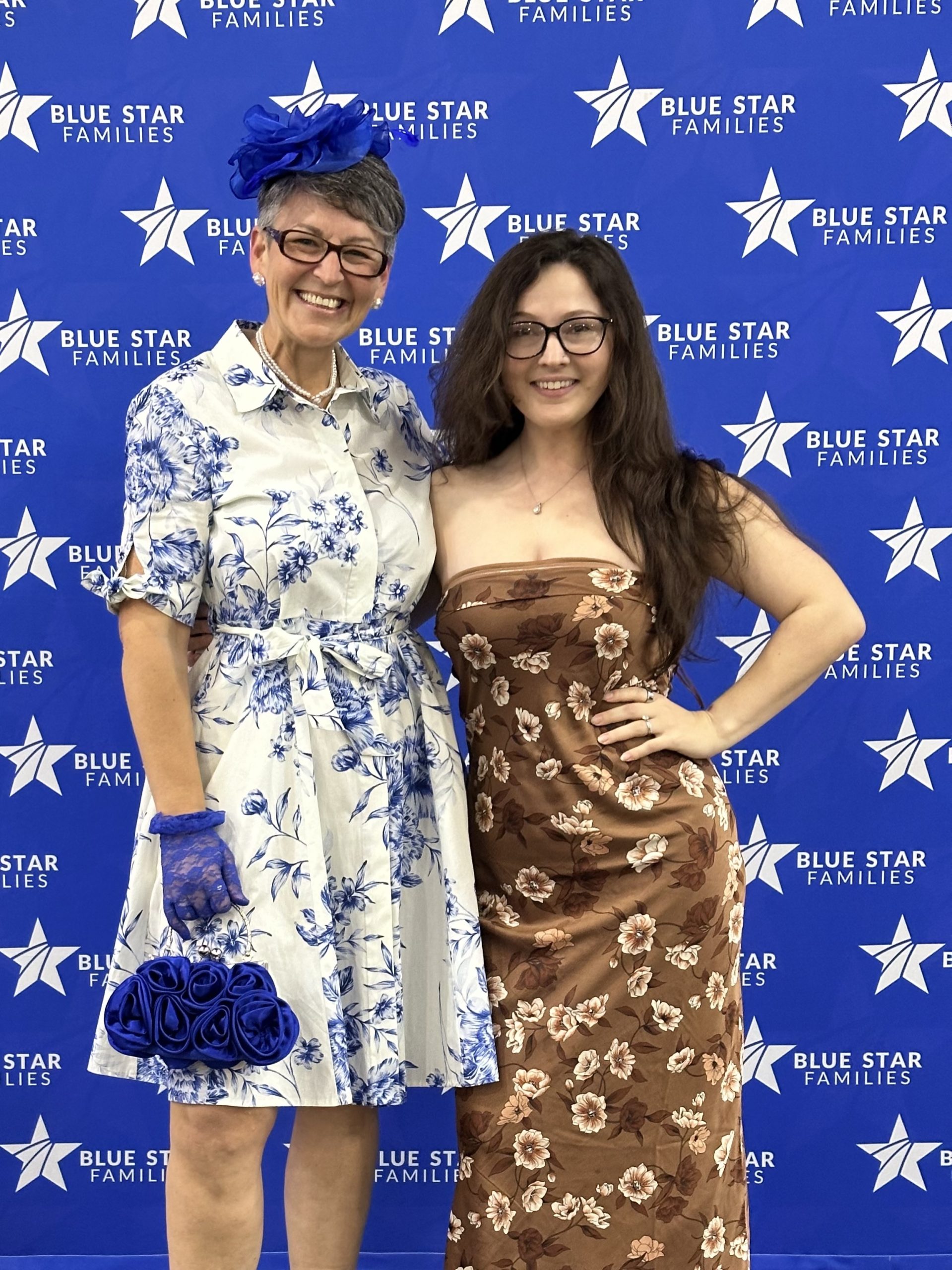 Working through the anger got me through the days. Finding people who “got it” got me through everything else. Military spouse loneliness is a specific kind of isolation. You can be surrounded by people who love you and still feel like the only person carrying what you are carrying. I did not walk into community easily. Blue Star Families Chicagoland kept reaching out before I finally showed up. What I found stopped me: a room full of people from different branches, backgrounds, and stages of military life, all carrying the same weight.
At every event, whether a Coffee Connect or the Military Spouse Appreciation Tea Party Brunch, the same things came up: isolation, career disruption, exhaustion, and the pressure to keep functioning while large pieces of life stay outside your control. Hearing other people say out loud what I had only thought changed something in me. You can deeply love your spouse and still struggle with this life. Organizations like through Syracuse University, and the USO exist in the gap between what the military provides and what military families actually need.
Saying Yes to the Scary Things
Community gave me enough ground to start rebuilding. I enrolled in an MBA program at the University of Illinois Urbana-Champaign, which started as a practical decision and became something more personal: proof to myself that this deployment had not put a ceiling on my ambition. I do coursework after my daughter goes to sleep because that is when the time exists.
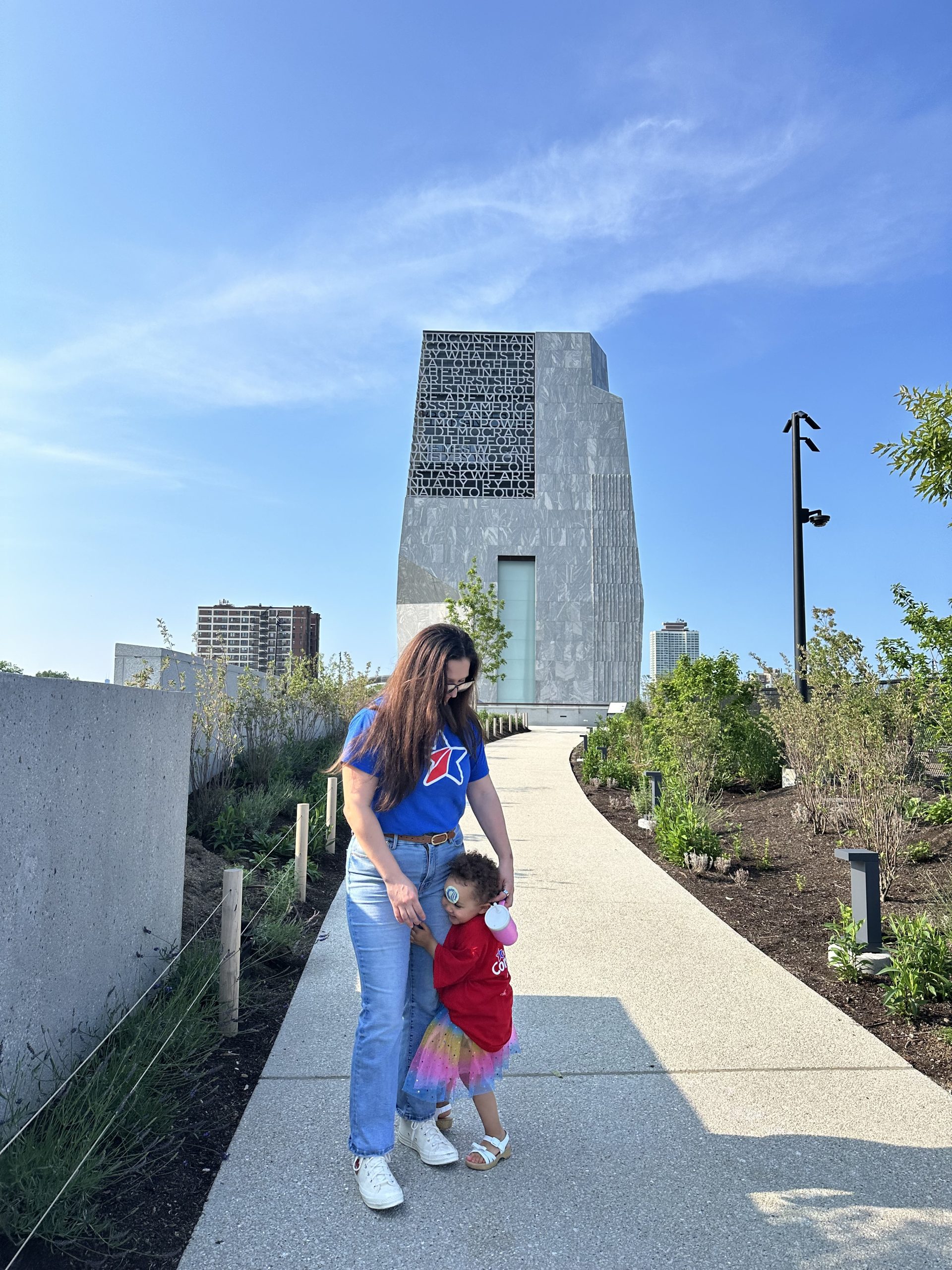
Then I started saying yes to things that scared me, and I started tracking it. I call it my 1,000 Rejections Challenge: a spreadsheet where every application, pitch, scholarship, and opportunity gets logged. I built it expecting it to fill with no. It has not. Saying yes landed me on a television set as an extra, sent me across the country to accept an MBA scholarship at a gala I almost declined, earned me a writing competition win that came with Wuthering Heights memorabilia I did not know I needed, and walked me through the Obama Presidential Center before it opened to the public. None of it arrived because I felt ready. It arrived because I was willing to ask before I felt certain.
This year, the country turns 250. For as long as there has been an America, someone has been at home holding everything together while someone they love went somewhere dangerous for a reason larger than themselves. That is not a new story. What is new is finally telling it honestly.
Who I Am on the Other Side
 I am still figuring out what the version of me on the other side of this deployment looks like. She is not who I was two years ago, and I mean that as something true rather than something tidy. She has gray hairs. She has a complicated relationship with the word “resilient” and a two-year-old she fought hard to stay present for. She stepped back professionally in ways that still sting and is finishing an MBA in the margins of her day.
She is also showing up. Through volunteerism, through community, through being honest in rooms where honesty about military spouse life is not always welcome. Military spouses are more capable than most systems currently allow us to demonstrate. I am trying to be one of the people who says that out loud.
I do not have a tidy ending because the story is still being written. The deployment ended; the rebuilding continues. What I know is this: I came in someone who did not feel ready, and I am leaving as someone who embraces the unknown and opportunity. The career, the degree, the community. None of it was the plan. All of it was the making of me.
About the Author: Sabina Lyszczarczyk is a military spouse, MBA candidate at the University of Illinois Urbana-Champaign, former federal employee, and volunteer with Blue Star Families Chicagoland. She and lives outside Chicago with her husband and their two-year-old daughter. Connect with her on LinkedIn.
The views and experiences shared in these guest blogs are the authors’ own and do not necessarily reflect the positions of IVMF or Syracuse University. We’re grateful to each contributor for their honesty and for trusting us with their story. Learn more about the professional and personal challenges military spouses face on a daily basis at IVMF’s The Career You Never See.